Dr. Caldwell: Medicaid audit largely clean; district readies for state monitoring and IEP redesign
Loading...
Summary
Dr. Caldwell told the committee the district's Medicaid audit (50 records) produced no required repayments; the district will submit a corrective action plan for transportation logs, is preparing extended-school-year staffing, is rolling out a Section 504 workflow module in Aspen, and is planning to implement IEP changes prompted by Senate Bill 2526.
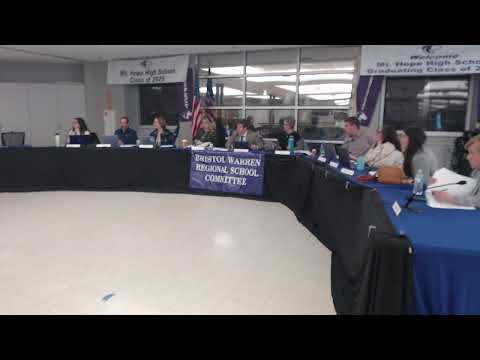
Dr. Caldwell told the Bristol Warren Regional School Committee on March 23 that the district's recent on-site Medicaid audit produced a largely clean report and that the district will not be required to repay funds. He said the audit team reviewed 50 records and identified a corrective action related to transportation logs; the district's vendor will redesign the log and submit the corrective action plan for periodic review.
"I am happy to report that our report is essentially quite clean," Dr. Caldwell said, adding that the transportation-log corrective action stems from a state requirement change that affected many districts.
Caldwell reviewed special-education staffing changes (Amanda Madore moved to the high school; Danielle Carty filled the elementary role) and said the district's special-education population is largely stable (a roughly 0.3 percent decrease in the percentage of students identified), though counts include speech-only students and placements outside the district such as CTE and day schools. He clarified that apparent high pre-K IEP percentages reflect inclusion of speech-only and community-based placements rather than all students physically in district-run pre-K classrooms.
The office is implementing a Section 504 module in the Aspen student-information system to standardize workflows (referral, reevaluation, annual renewal) and said extended-school-year planning, which begins in February, faces summer staffing challenges. Dr. Caldwell also described district support for teacher assistants pursuing Registered Behavior Technician (RBT) credentials, saying the district's timeline targets current staff completion by 2026-06-30 and requires new hires to complete certification within one year of hire. RBTs must be supervised by a Board Certified Behavior Analyst (BCBA); the district currently does not employ a full-time BCBA but has budgeted for additional supervisory time as need grows.
Dr. Caldwell briefed the committee on the state School Support Team visit, a cyclical monitoring review the district hosts every six years. The visit began the day of the meeting; a public report will be compiled by the visiting team and the district will have an opportunity to request factual corrections before publication. Caldwell also previewed changes required by the state IEP redesign (Senate Bill 2526), including a new requirement to provide documents to families three calendar days before meetings, an evaluation timeline change from 60 to 63 calendar days, and provisions around parent signature and partial agreement on IEPs.
Committee members asked for specific counts and for the number of TAs who have completed RBT coursework and testing; Dr. Caldwell said she would provide precise numbers to the committee. She also confirmed the district will seek parent leaders to revive the Special-Education Local Advisory Committee (LAC), which state rules require to meet at least four times a year.
Dr. Caldwell said the overall purpose of the monitoring and redesign work is improvement and improved alignment with state law and practice; she pledged to return findings to the committee when the state report is available.