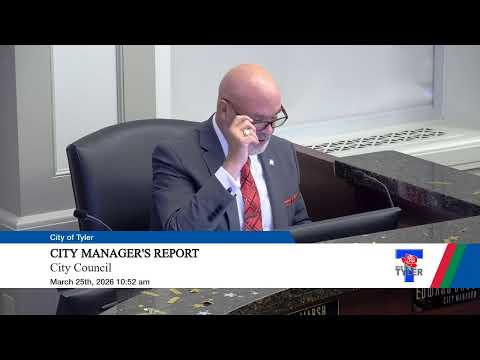
Tyler council denies South Broadway site-plan amendment after residents press flooding concerns
Loading...
Summary
After hours of technical briefings and public comment about creek flooding and stormwater, the Tyler City Council voted to deny a site-plan amendment for a planned office district at 2801 and 2835 South Broadway, citing unresolved drainage questions and resident opposition.
The Tyler City Council voted to deny a site-plan amendment for a planned office district at 2801 and 2835 South Broadway after extended testimony from engineers, the applicant and neighbors who said nearby homes have flooded repeatedly.
Mayor Warren moved to deny the amendment and Councilmember Wynne seconded. A roll call recorded Council members Hawkins, Marsh, Wynne and Curtis voting to deny; Councilmember Haney voted no and Councilmember Nicholas was absent. The motion carried, blocking the applicant's proposed 6,000-square-foot office layout as presented.
Planning Director Kyle Kingman outlined the proposal as an amendment to a previously approved 2019 plan, not a rezoning, saying the submittal included a supplemental six-foot privacy fence and enhanced evergreen buffering intended to reduce visual and light impacts on adjacent homes. He reiterated that engineering review and stormwater calculations are required before any building permit is issued.
Developer William Spencer told the council the detention pond on site "is overdetaining for our site," and said the revised plan moves the building farther from homes and increases screening. "We feel like we still plan to be a tenant in this office building," Spencer said, urging approval to allow the project to move forward.
Residents and nearby homeowners urged the council to delay action until a formal channel improvement or other drainage remedy is funded and constructed. Attorney Will Ritchie presented an internal city email he said was produced by public records requests that warned the development "would certainly increase stormwater volumes, potentially leading to more structure flooding," and urged the council to reject plans that could increase flooding risk.
City engineers described options to widen a constricted section of the adjacent tributary from roughly 7 feet to as much as 15 feet and noted construction could require retaining walls or sheet piling. Staff cited a construction cost range for potential channel work of roughly $405,100 to $900,000, depending on the solution. Engineers also noted some creek banks are privately owned and that easements or private agreements could be required to implement a regional remedy.
Council members debated whether drainage is properly addressed at the zoning/site-plan stage or during subsequent engineering review. Councilmember Haney said technical stormwater review normally follows site-plan approval, but other council members and many residents argued the known history of flooding warrants denying the amendment until downstream issues are addressed.
Because the motion to deny passed, the applicant will need to submit a revised site plan or pursue other options (including relocating a sewer line or returning to the Planning & Zoning Commission) before the project can proceed.
The council's denial closes the current proposal; councilors and staff said engineering and land-use processes remain available if the applicant returns with revised plans that address the drainage concerns.