Terrebonne planners outline four‑step traffic‑calming pilot after residents request speed bumps
Loading...
Summary
Planning staff presented a four‑step traffic‑calming pilot (portable tracker device, speed‑display trailer, targeted enforcement, follow‑up engineering) and said 14 locations are queued; council and residents discussed dead‑end signage and speed‑table criteria and next steps to adopt a program replacing the older speed‑hump ordinance.
Parish planning staff outlined a new multi‑week traffic‑calming pilot the council said is intended to address neighborhood speeding complaints without relying solely on the old speed‑hump ordinance.
The proposed process begins with a one‑week deployment of a compact speed‑tracking device, followed by placement of a speed‑display trailer the next week, a period of targeted law‑enforcement warnings or citations, and a return of the tracker for a final measurement. Staff said those four phases are combined with local knowledge and, when warranted, a traffic engineer's review to recommend measures that could include speed tables, lowered posted limits, curb extensions or enforcement—whichever best fits the location.
The program came after residents asked for speed bumps and signs in residential neighborhoods (Linda Ann Street was cited) and after staff explained why the prior speed‑hump ordinance often excluded locations where the measured 85th‑percentile speeds fell only slightly above the limit. Staff said the parish currently has 14 candidate locations on the list and will present formal program details and engineer proposals to the council for adoption so the parish can streamline approvals and make more flexible choices about calming devices.
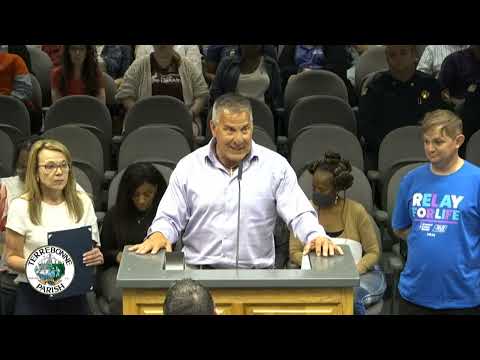
Public comment from neighbors emphasized safety concerns near schools and on residential streets; staff and council asked residents to use mgoconnect.org for requests and to supply petition and local information when seeking physical traffic calming. Council members also urged coordination with law enforcement and the Metropolitan Planning Organization for intersection changes.
Next steps: staff will select traffic engineers from proposals, present the program for council review, and then begin implementing the pilot on identified candidate streets.