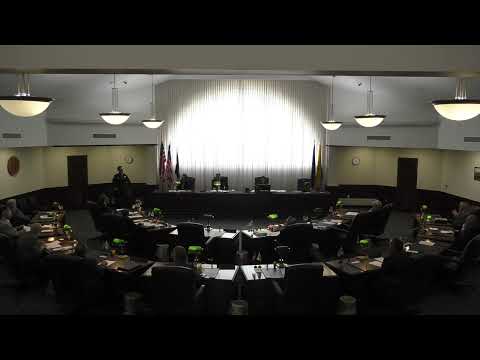
Sheriff Tom Doherty outlines staffing, jail pressures and training complex at Livingston County board meeting
Loading...
Summary
Sheriff Tom Doherty told the Livingston County Board of Supervisors the sheriff’s office is near 220 staff (about 245 at full strength), houses roughly 60 federal inmates that generate about "a couple million" dollars annually, and is advancing a regional training complex used by state and federal partners.
Sheriff Tom Doherty updated the Livingston County Board of Supervisors on department staffing, jail operations and training resources during the board's regular meeting.
Doherty said the sheriff's office has about 220 members now and would be roughly 245 when fully staffed. He described four bureaus — professional standards (including accreditation and internal affairs), correctional services (the jail and court-related responsibilities), police (patrol and CID), and communications (9-1-1) — and credited community policing and internal training for recruitment and retention gains.
On corrections, Doherty said the county houses "roughly 60-ish" federal inmates on an average day and that contracting to hold those inmates brings in "a couple million dollars a year" in revenue. He described the jail as "incredibly difficult and challenging" to operate and said correctional services remain a major workload for the department.
Doherty highlighted the communications bureau — the 9-1-1 center — as the starting point for emergency response, noting that staff handle thousands of lines and that the bureau has improved its hiring and vetting processes. He praised senior dispatcher Kelly Switzer, recognized in the meeting for 25 years of service and recent promotion to administrative senior dispatcher.
The sheriff discussed a county training complex that is seeing use from the New York State Police and U.S. Marshals and said the facility’s regional use underscores its value. He also defended department equipment purchases intended to protect deputies in high-risk incidents.
In a brief exchange about enforcement of utility and farm vehicles on county roads, Doherty said some municipalities have allowed exceptions but that, in general, non-registered utility vehicles are not authorized on county roads unless they meet vehicle registration and equipment requirements; he added that deputies rarely prioritize enforcement of such vehicles on rural roads.
The board did not take any formal action on the update; the presentation concluded with questions from supervisors.