Get Full Government Meeting Transcripts, Videos, & Alerts Forever!
Get email alerts on the Utilities.smart Meters topic
No spam. Unsubscribe anytime.
Berlin council narrowly approves smart-meter opt-out policy, sets service and monthly opt-out fees
Summary
The Berlin Mayor & Council approved a smart-meter opt-out policy and related tariff language 3–1. Staff recommended using the $50 service call as the one-time opt-out fee and a $17 monthly charge for customers who opt out; electric tariff changes require Public Service Commission approval.
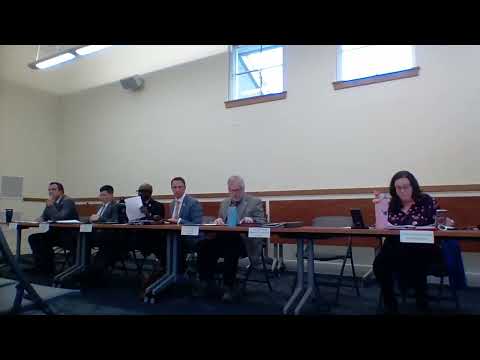
The Berlin Mayor and Council voted 3–1 on March 23 to approve a smart-meter (advanced metering infrastructure) opt-out policy and supporting tariff language, a measure the town says balances customer choice with the operational costs of manual meter reading.
Town Administrator Mary Baltz said staff recommends not imposing an additional $25 opt-out processing fee and instead charging the existing $50 service visit charge as the one-time opt-out cost. "Instead of making that one-time fee $25 plus charging 50, what we're proposing is charge the $50 service fee and leave it at that," she said. Baltz also noted the $17 monthly fee for customers who choose to remain on manual reads would still apply.
Tim Lawrence, the town's electric utility director, described the operational difference between remote reading and manual reads: "When you go out and manually read a meter, you gotta bring that information back to customer service, then they have to manually enter it data wise. So it's not just reading the meters — it's also the labor that goes into it at customer service." Lawrence also described benefits of smart meters, including near-real-time data and the ability to detect high-temperature meter alarms and under-recording by older mechanical meters.
Council members raised fairness questions about the recurring monthly charge. One council member asked, "I don't see why there's a $17 fee for those who choose not to have the smart meter," noting it could feel like subsidizing a service other customers use. Baltz and utility staff said the fee covers the additional labor and data-entry burden and that the charge would apply only after the Public Service Commission approves the tariff for electric meters.
The council also heard that water-meter opt-outs could be implemented immediately under town policy, while electric opt-out charges must await state-level tariff approval. Baltz said the town has six electric opt-out requests so far (out of roughly 1,600 electric meters installed).
The resolution (2026-02) was adopted 3–1, with Council Member Horace recorded in opposition and Council Member Nichols absent. The council also took a separate action to advance tariff language related to electric rates; staff will file the tariff with the Public Service Commission and the opt-out fees for electric meters will begin only after state approval. The policy is not retroactive to previous meter installations.
Next steps: staff will finalize tariff wording, notify the small number of residents who already expressed interest, and submit the tariff to the Public Service Commission. The council's vote advances the town's AMI deployment while preserving a formal opt-out path for residents.