Get Full Government Meeting Transcripts, Videos, & Alerts Forever!
Get email alerts on the Traffic Safety topic
No spam. Unsubscribe anytime.
CHP reports jump in high-speed citations, outlines traffic-safety push for Lancaster
Summary
A California Highway Patrol representative told the Lancaster Criminal Justice Commission that speeding and unlicensed-driver citations rose sharply year over year and outlined a strategic plan — including more enforcement campaigns, beat-based patrols and analytics-driven deployment — to reduce fatal collisions.
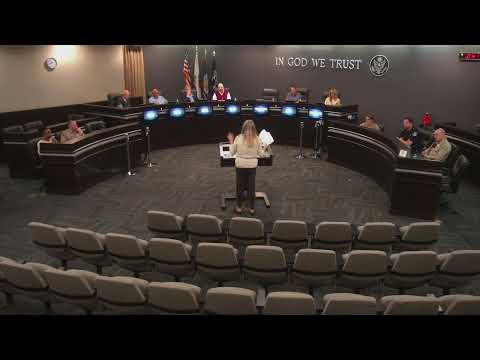
A California Highway Patrol representative told the Lancaster Criminal Justice Commission that the agency recorded 8,345 citations in Lancaster and adjacent beats during 2025 and has seen a year-over-year rise in high-speed enforcement.
"Last year ... there was 8,345 citations issued," the CHP representative said, adding that citations for drivers exceeding 65 mph rose from 367 to 537 in the comparable early-2026 period. The presenter said the top enforcement priorities are speed, unbelted drivers and impaired driving because those behaviors are the primary causes of serious and fatal collisions.
CHP staff described how they divide the area into beats (including beats that run through Lancaster and along the 14 Freeway) and use collision analytics to tailor patrol start times, shifts and beat assignments. The presenter said the Antelope Valley experienced a spike to 47 fatal collisions in 2025, with about 15 of those near Lancaster, and set a regional reduction goal to 42 fatalities.
"I like to focus in view patrol because I believe that there's no greater deterrent to crime and crashes than the presence of a uniformed officer," the CHP representative said, explaining the emphasis on visible patrols and beat accountability.
The CHP also announced six planned enforcement campaigns in 2026 (up from four in 2025) and said it will provide after-action reports to the commission. Commissioners asked for copies of the presentation materials; the CHP representative said the PowerPoint was emailed and offered to tailor future reports to the commission's requested metrics.
On technology, the presenter said the agency is considering drone use for collision-scene mapping but flagged costs and training requirements. "Yes, we're considering drones," the CHP representative said, and described how drones can reduce evidence-collection time at fatal collision scenes.
The CHP representative concluded by inviting follow-up questions and promising tailored data on beat-level citations and arrest figures at future meetings.