Get Full Government Meeting Transcripts, Videos, & Alerts Forever!
Get email alerts on the Monument Dedication topic
No spam. Unsubscribe anytime.
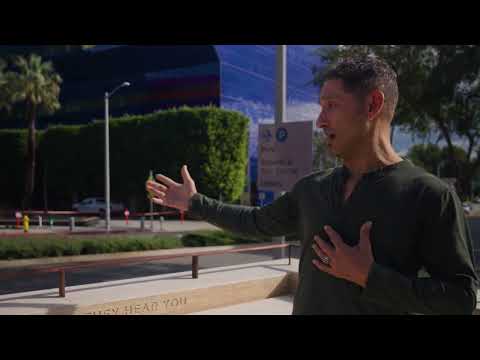
Erwin Rappaport opens AIDS Monument in West Hollywood, highlights community response and history
Summary
Erwin Rappaport, chair of the Foundation for the AIDS Monument, opened the new AIDS Monument in West Hollywood, describing its 147 bronze 'traces,' an online word wall linking visitor stories, and the role of community organizing and medical advances in changing the course of the epidemic.
Erwin Rappaport, chair of the Foundation for the AIDS Monument, opened the AIDS Monument in West Hollywood and described the memorial's design, its educational features and the history it commemorates.
Rappaport said the monument — developed over 15 years in partnership with the city of West Hollywood, which provided land and substantial funding — includes 147 bronze pillars called “traces,” 30 of which are engraved with words that link to a word wall on the foundation's website, aidsmonument.org. "It's so exciting to finally open this monument after 15 years of developing it," Rappaport said.
The monument is designed to communicate the early years of the epidemic and to serve as a civic gathering place. Rappaport said the first field of traces represents the earliest four to five years of the disease, a period of "fear and confusion and death" before tests and causes were widely known. Narrative tablets at the entrance provide basic history and context intended for visitors who may be unfamiliar with HIV and AIDS.
Rappaport discussed the era when the disease was commonly referred to as GRID (gay-related immune deficiency) and said community organizations formed in the mid‑to‑late 1980s and early 1990s to provide care when federal response was limited. He credited the arrival of protease inhibitor medications in 1995–1996 with dramatically reducing the death toll: "the life saving medications, the protease inhibitors, were finally available to the public to end 15 years of death," he said.
Rappaport also invoked the activist group ACT UP and its slogan embroidered on the monument: "silence equals death, action equals life." He described ACT UP's high‑profile tactics — from disruptions on Wall Street and at Saint Patrick's Cathedral to protests at the Rose Parade and at county hospitals — as instrumental in generating public attention and pressuring for research, funding and care changes. He named Larry Kramer as ACT UP's founder in New York City.
Rappaport placed local loss in a national context, saying West Hollywood "suffered thousands of losses" and asserting an estimated 700,000 Americans have died of AIDS, a figure he used to underline the epidemic's scale. He closed by urging younger generations to carry forward the spirit of activism: "we hope that it inspires ... younger generations to take that spark of activism and use it to advocate for a cause that they believe in," he said.
The monument is presented as both a memorial and a public forum for gatherings, protests and celebrations, with interpretive elements designed to guide visitors through the history and personal stories the Foundation has collected.