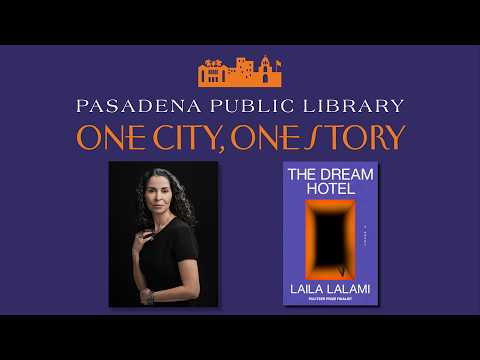
Leila Lalami discusses surveillance, data and selfhood at Pasadena 1 City, 1 Story event
Loading...
Summary
Author Leila Lalami told a Pasadena audience that her novel The Dream Hotel explores data collection, privacy and selfhood, citing a 2014 phone notification as the seed for the book and warning that surveillance disproportionately targets marginalized groups.
Leila Lalami, author of The Dream Hotel, told an audience at Pasadena’s 24th annual 1 City, 1 Story event that her novel uses speculative fiction to examine who owns the data our bodies and devices produce and whether such data can be used against people.
Lalami described a 2014 incident that inspired the book: she received a phone notification suggesting she leave immediately in order to reach her yoga studio on time, despite not having told any calendar or app about that routine. "Pretty soon the only privacy any of us will have left will be in our dreams," she said, describing that moment as the seed for a story about devices that harvest habits.
She explained the book’s central setting, a facility called Madison, as a fictional retention center in California where the state and corporations use dream and biometric data to predict future crimes and place people under observation. Lalami said the novel is not intended as a technical prediction but as a "world in miniature" to explore selfhood when privacy vanishes.
Lalami also argued technological surveillance is not neutral: it is "deployed against those minorities more than white people," she said, and raised concerns about how immigrants and non-normative bodies can face disproportionate scrutiny. She urged readers to view digital archives in historical context — archives are incomplete and fragile — and encouraged community and political organizing to constrain corporate data power.
On a practical level, Lalami described personal steps she’s taken—plugging devices into another room, saving cookie choices, and occasionally giving false details to social platforms—calling them small acts of resistance. She closed by praising libraries as places that provide free access to knowledge and by staying afterward to sign copies in the Gamble Lounge.