Lifetime Citizen Portal Access — AI Briefings, Alerts & Unlimited Follows
Cerritos planners receive detailed tree-care briefing; staff notes 28,000 city trees and a Canary Island pine reforestation program
Loading...
Summary
Parks and Trees Superintendent Jorge Martinez told the Planning Commission the city maintains about 28,000 public trees and outlined when homeowners vs. the city are responsible for care; arborist Bino Hoguin said removal-application backlogs for non-emergencies can be four to five years.
The Cerritos Planning Commission on April 1 received an informational report from Parks and Trees Superintendent Jorge Martinez about who is responsible for tree care across city parkways, private property and HOA-managed areas, and about the city’s pruning, removal and replacement practices.
“Cerritos has a large and valuable urban forest,” Martinez said. “The city maintains about 28,000 public trees throughout the community.” Martinez and Public Works Director Alvin Papa explained that trees in the public parkway (the strip between curb and sidewalk in front of single-family homes) are typically city trees; homeowners are asked to water and report problems but may not remove or heavily trim a city parkway tree without following city processes.
City arborist Bino Hoguin described permit requirements and operational practice: trimming permits apply primarily to HOAs, commercial and industrial properties and require licensed contractors and inspections. “If we're speaking about removal applications, we do have a backlog of removal applications that are about 4 to 5 years old,” Hoguin said, clarifying that emergency work and work reported through a work order is generally handled more quickly.
On timing, Public Works Director Alvin Papa told commissioners that staff typically inspects hazard reports within a week or two and will respond the same day for emergencies. “If there is a hazard and it was brought to public works’ attention, we would address it right away,” he said.
Martinez described ongoing efforts to replace Canary Island pines at homeowners’ requests through a reforestation program: “There’s about 6,000 Canary Island pines,” he said, and replacements are generally medium- to smaller-growing species selected by the city arborist to better fit planting sites. Staff said the city trims parkway trees on roughly a four-year cycle and offers pay-to-trim and pay-to-remove programs for homeowners who want work done sooner or at their expense.
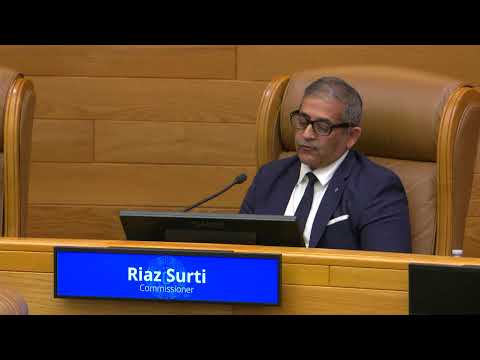
Commissioners raised a series of questions: Commissioner Chowhan pressed on the city’s use of a 4-inch diameter threshold in some standard conditions of approval and asked whether that definition is appropriate; staff said the 4-inch reference comes from standard conditions attached to certain development approvals (not the municipal code) and that the commission can impose different standards through precise plans. Commissioners also asked about sidewalk repairs, contractor fee structures, and the city’s tree-selection process. Staff directed residents to the city’s tree-care web page and said residents should call city staff before performing work to avoid fines and code enforcement for unauthorized trimming.
Staff concluded that tree care in Cerritos is a shared responsibility: the city maintains many public trees, while homeowners, HOAs and property owners are responsible for private trees and must follow permit requirements when applicable.