Get Full Government Meeting Transcripts, Videos, & Alerts Forever!
Get email alerts on the Data Center And Surveillance topic
No spam. Unsubscribe anytime.
Bloomington residents urge council to block proposed data center, oppose Flock surveillance funding
Summary
Dozens of residents and local experts told the council March 23 they oppose a proposed data center and funding for Flock ALPR cameras and police gas masks, citing water and energy use, limited long-term jobs, privacy and disclosure concerns, and requests for transparent scheduling of the item.
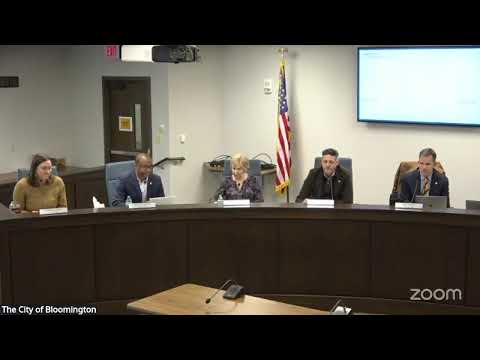
Dozens of Bloomington residents used the council’s public-comment period March 23 to urge the City Council to prevent data centers and to end or reconsider the city’s contract with Flock, a company that provides automated license-plate readers.
Speakers including Steven Jepsen, Chris Gibbons and Catherine Sheck told the council they were concerned about the potential water and energy demands of data centers and about late agenda removals that prevented public comment on items. “I just wanted to point out… the city Facebook page said they had 30% of water loss. Where that water went, no one knows,” Steven Jepsen said as he urged caution before approving large developments.
Why it matters: speakers argued the scale of water and electric consumption for data centers could strain Bloomington’s utilities and drive costs for residents; several also framed the Flock ALPR contract as a civil‑liberties and transparency issue. Dr. Caitlin Selman, an assistant professor in criminal justice at Illinois State University, summarized academic findings that she said show limited policing benefits from ALPR expansion and noted disparate surveillance impacts on predominantly Black and high‑poverty neighborhoods. “The claims made and sold by companies like Flock that ALPRs act as a deterrent are unsubstantiated,” she said.
Residents raised several concrete requests and claims: Chris Gibbons (Ward 4) urged the council to pull and vote down consent items funding Flock and a $73,014 gas‑mask purchase for the Bloomington Police Department; Catherine Sheck said agenda items are being removed the day of hearings, leaving residents without a scheduled chance to comment; and Ruth Burke warned the council against quietly inviting large, resource‑intensive industries to annexed or rezoned land, citing a recently annexed 350‑acre site and a push to create a larger industrial/technology park.
What residents asked for next: multiple speakers asked the council to publish the rescheduled data‑center agenda date so citizens can return when the matter is formally considered, and to halt or revisit the Flock contract. Alan Ledger (virtual) read an emailed comment that asked council members to publicly state that particular parcels would not be used or leased to data centers or companies developing artificial‑intelligence programming.
The council recorded the concerns on the public record; city staff and councilors did not take action on those items at the meeting. A Public Safety and Community Relations Board meeting was announced for the following Wednesday to address lingering questions about the Flock cameras and the police department’s use of related data.
Next steps: Several speakers said they will return when the council schedules the data‑center item; the clerk noted the item had been removed from the evening’s agenda and would be re‑scheduled.