Get Full Government Meeting Transcripts, Videos, & Alerts Forever!
Get email alerts on the Audit topic
No spam. Unsubscribe anytime.
Atwater City Council accepts 2024 audit; auditors issue clean opinion but flag procedural gaps
Summary
Auditors gave the City of Atwater an unmodified (clean) opinion on its FY2023-24 financial statements but identified three significant deficiencies — late audit timing, incomplete long-term-debt roll-forward schedules and missed suspension/debarment checks for federal contractors; council accepted the reports unanimously.
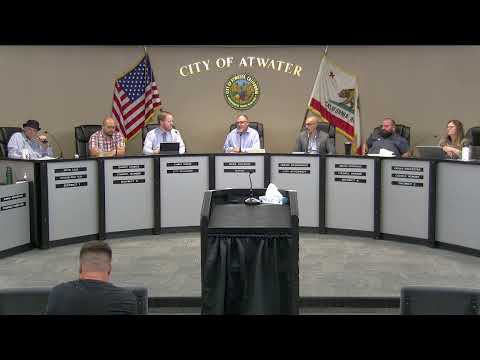
The Atwater City Council on Oct. 13 received and accepted the city27s annual financial report and single-audit for the year ended June 30, 2024, after an audit partner told council the statements received an "unmodified opinion." Anna Nicholas, the city27s finance director, introduced the item and said the audit and related reports were included in the agenda packet.
"We have issued an unmodified opinion," Ahmed Badawi of Badawi & Associates told the council, summing up the firm27s audit opinion and explaining that an unmodified opinion means the financial statements are fairly stated. Badawi walked members through the firm27s scope, methodology and several key financial measures, noting the city holds robust cash and capital-asset balances and that the unrestricted general-fund balance equates to roughly 12 months of expenditures.
Badawi also identified three significant deficiencies discovered during the engagement. He said the city27s audit was late relative to typical timing and that audit preparedness needs improvement; the audit team found insufficient roll-forward schedules for long-term debt and asked the city to provide clearer year-over-year debt summaries; and, on federal grant compliance, the city had not consistently documented checks of contractor suspension and debarment status (for example via sam.gov) when federal funds were used. "The city is almost a year behind," Badawi said of the audit timing and urged more timely completion going forward.
Council members pressed for plain-language steps and departmental responsibility. One council member asked which departments were accountable for each deficiency; Badawi and Finance Director Anna Nicholas pointed to finance for audit timing and to the departments that hire contractors (public works, engineering) for suspension/debarment documentation. Nicholas said departments had been notified, cited specific measures (adding contractor certification language to procurement packets) and said the measure-B (public safety sales tax) fund was included in the audit as a major fund, meaning its activity was audited.
Public commenters and council members discussed possible next steps: regular 90-day updates from departments, making measure B a permanent major fund for annual audit visibility, and exploring rate studies and one-time use of general-fund balances to improve long-term fiscal position. City staff noted the audit cost was about $35,000 and emphasized that more timely audits are a practical tool for better debt financing.
After discussion, a motion to approve staff27s recommendation to receive and accept the annual financial report and single audit passed unanimously (motion by Raymond, second by Ambrees). The council recorded a unanimous vote in favor.
The council did not take additional formal policy action that night beyond accepting the reports, and staff pledged to return with follow-up steps and departmental updates.