Get Full Government Meeting Transcripts, Videos, & Alerts Forever!
Get email alerts on the Parking Oversized Vehicles topic
No spam. Unsubscribe anytime.
Montclair council reviews draft ordinance to curb oversized vehicle parking, refers item for more study
Summary
City staff proposed banning oversized vehicles in residential areas, restricting overnight parking in nonresidential areas (10 p.m.–5 a.m.), and a resident-only RV permit program; council members raised concerns about impacts on sole proprietors, delivery drivers and people living in RVs and asked staff to return with cost, enforcement and equity plans.
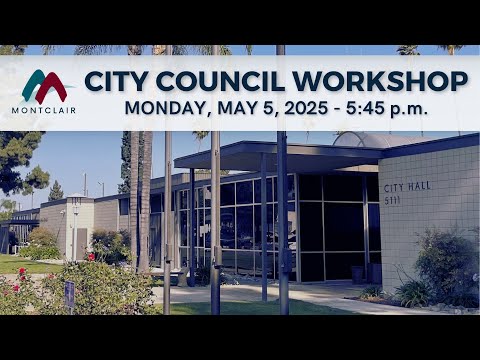
Montclair — City staff on Thursday presented a draft ordinance to restrict parking of oversized vehicles and unattached trailers on city streets, proposing a full ban in residential districts, limited nighttime hours in nonresidential districts and a resident-only RV permit program.
"We're here to do a workshop on regulation of oversized vehicle parking," Jim Eckert told the City Council as he outlined the proposal and the legal authority staff is relying on under the California Vehicle Code. Eckert described line-of-sight, blocked traffic-control devices and loss of on-street parking as the central public-safety rationales for the rules.
The draft defines an oversized vehicle as longer than 22 feet, higher than 8 feet, or wider than 8 feet, and would include recreational vehicles regardless of size (pickup trucks defined under state law would be exempt). Staff said unattached trailers would be banned citywide but allowed with limited exceptions for active loading or when a Public Works encroachment permit is issued.
Under the proposal, oversized vehicles would be banned in residential zones; in commercial, manufacturing and industrial areas they would be prohibited overnight from 10 p.m. to 5 a.m. Staff also recommended a 50-foot buffer from intersections for oversized vehicles and a 5-foot buffer from curb cuts; the presentation noted that state law (AB 413) already requires a 20-foot intersection buffer for all vehicles.
Eckert outlined a resident-only RV permit program that would provide up to 12 permits per household per year — 10 short-term permits of up to 72 hours and two longer permits of up to seven consecutive nights — with a required 24-hour break between permit uses. Staff said permit issuance could be automated through online vendors and could use QR codes or license-plate-based systems to keep costs down.
Council members pressed staff on enforcement and equity. "This is somebody's business, though. This is how they make a living," said Councilmember Ruhl, arguing that independent delivery drivers and sole proprietors who park work vans at home could be unduly burdened. Ruhl and other council members asked how officers would determine whether a vehicle was actively being used for work and whether measuring or repeated enforcement would be practical.
Staff replied that enforcement would be civil parking enforcement (tickets with appeal rights, and impound authority under existing vehicle code provisions in some cases) and that officers would investigate complaints rather than automatically issuing citations. Eckert said sprinter and transit vans were intended to fall below the thresholds the city proposed so that many contractor vans would not be captured by the ordinance.
Councilmember Martinez urged staff to consider equity measures for people living in RVs, noting other cities' "safe parking" programs and asking the city manager to research similar options to limit disproportionate impacts on residents experiencing homelessness who rely on RVs for shelter.
Staff told the council permit fees are not yet set and will depend on the vendor and processing method; Eckert cited a range seen in other cities of roughly $7 to $50 depending on duration and processing costs but said an exact fee would come back with a fee resolution.
No formal vote was taken at the workshop. Mayor Betray and the council agreed to place the ordinance on a future council meeting agenda for continued discussion and asked staff to return with additional information on estimated permit fees, a proposed warning/implementation period and possible exceptions for working vehicles. No members of the public spoke on the item at the close of the workshop.
The item will return to a future meeting for further deliberation; staff said any adopted restrictions would not take effect until signage and an implementation plan were in place.