Get Full Government Meeting Transcripts, Videos, & Alerts Forever!
Get email alerts on the Telecommunications topic
No spam. Unsubscribe anytime.
Rancho Palos Verdes narrows wireless-code changes, seeks coverage information from carriers
Summary
City staff presented extensive proposed amendments to municipal code sections governing small wireless facilities in the public right-of-way and on private property; the council directed staff to return with revised ordinance language that balances improved coverage with local aesthetics and procedural safeguards. Key council directions included removing the mandatory master deployment plan while still seeking coverage information, retaining height and notification protections with limited discretionary exceptions, rejecting large equipment volumes, and requiring application fees before review.
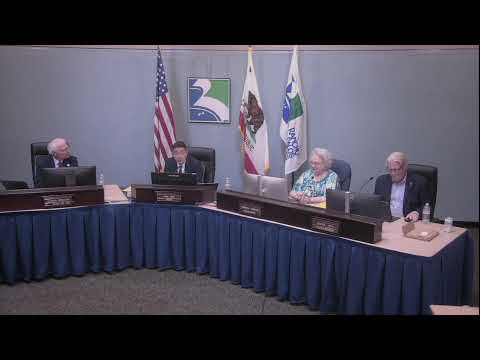
The Rancho Palos Verdes City Council on Tuesday reviewed a lengthy set of proposed changes to the city's wireless telecommunication rules and gave staff direction to draft ordinance language reflecting the council's concerns.
Staff told the council that carriers had proposed about 120 amendments to the municipal code and that staff recommended accepting 69, rejecting 38 and returning later on 15 sections. The proposals covered a wide range of technical and process issues: master deployment plans, antenna heights, equipment size, undergrounding, allowable locations (traffic signals, decorative poles), noise and photo-simulation requirements, public notification radii, and application fees.
At the heart of the discussion was the tradeoff council members described as coverage versus neighborhood character. "We can try to encourage and streamline the process, but we cannot control whether carriers want to come and invest," the city manager said during the presentation. Staff asked whether the council wanted to retain requirements designed to preserve visual quality even if they might slow installation.
Council direction and staff recommendations agreed on several points: remove the mandatory master deployment plan from the code but seek a way for staff to see coverage or propagation maps (carriers treat citywide propagation maps as proprietary); keep limits on how far antennas extend above existing poles but add discretionary pathways to approve modest exceptions in particular cases; reject carrier requests to increase the allowed equipment volume from the current 4 cubic feet to 28 cubic feet; and modify undergrounding requirements to require undergrounding "where feasible," giving staff and carriers more flexibility while asking for justification where it is not.
Verizon, participating virtually, said some installations require additional height and capacity to accommodate multiple technologies. "The 28 cubic feet is actually the small cell definition that the FCC put out," the Verizon representative said, arguing the larger envelope helps collocate multiple radios. Council members responded that the larger envelope would make equipment more visible and that any exceptions should be tied to clear, demonstrable public benefit.
On location and notification, staff recommended keeping the current 500-foot resident-notification radius; council members discussed allowing carriers to use existing vertical infrastructure (traffic signals, utility poles) and suggested narrowing search radii in some corridors to 250 feet where appropriate. Council also asked staff to investigate mechanisms that would let the city review carriers' coverage data without requiring carriers to file a formal, city-held master plan.
The council also addressed process issues raised by federal timelines for wireless reviews (the FCC shot clock). Staff recommended requiring applicants to submit payment with their application so the city would not begin an official review (and thereby start the shot clock) without the fee. Council supported the idea; staff said the code will be revised to ensure application fees are provided before the review process begins.
Ultimately the council voted to accept staff's recommendations and directed staff to return with revised ordinance language for chapter 12.18 (public right-of-way) and chapter 17.73 (private property) reflecting the council's guidance. The motion passed by unanimous roll call among the four members present. The council also asked that the Planning Commission review the private-property zoning amendments and provide recommendations before second reading of any ordinance.
What happens next: staff will draft ordinance text incorporating council direction, work further with carriers and technical consultants (for RF/noise/emissions review), and return to the Planning Commission and council for formal reading(s). Any site-specific proposals will continue to be processed under the existing code until the ordinances are adopted.
The council's deliberations emphasized two consistent themes: speeding installations where feasible to resolve coverage gaps while protecting views and neighborhood character, and preserving procedural safeguards so the city can review and, when necessary, require design changes.