Get Full Government Meeting Transcripts, Videos, & Alerts Forever!
Get email alerts on the Public Health Enforcement topic
No spam. Unsubscribe anytime.
Merced County officials tell Atwater council they are stepping up sweeps of unpermitted food vendors
Summary
Merced County environmental health and community development staff described recent enforcement against large-scale unpermitted food-vending operations, public-health risks from improper storage and preparation, and outreach to help vendors obtain permits. County staff said they conducted multiple impoundments of equipment and food and are coordinating with law enforcement.
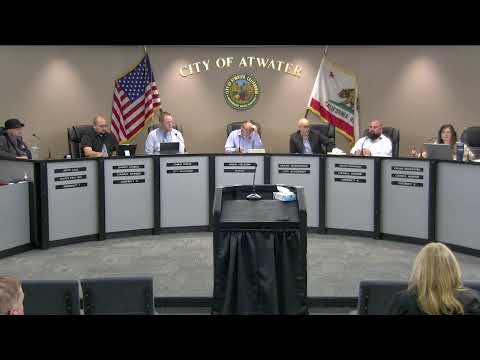
Merced County officials described stepped-up enforcement against unpermitted food vending at an Atwater City Council meeting, saying some operations the county has found pose public-health risks and appear to be large, organized enterprises rather than small, informal vendors.
Supervisor McDaniel introduced the county presentation, and Mark Mims, director of community and economic development, and Amanda Duran, deputy director of environmental health, outlined the county's approach. Duran described legal authorities the county uses for enforcement, including Health and Safety Code provisions to close unpermitted operations, impoundment and triple-fee penalties for operating without a permit, and vehicle-code authority to remove vehicles used in public offenses.
Duran described several enforcement actions and conditions she said staff encountered in Atwater and elsewhere: kitchens operating behind residences, food stored without refrigeration in high heat, and food prepared next to raw meat and trash. "The cleanliness of the unpermitted food vending is it's it's not great. It's not healthy," Duran told the council, and urged residents to report suspected vendors via a county complaint form she provided.
She said county teams have impounded large amounts of food and equipment during sweeps and described extensive storage of seized gear at a county facility with a 30-day redemption period; after that period equipment may be recycled or disposed. Duran also described one multi-vehicle, multi-person operation the county found through search-warrant work and said the capacity of some operations was large enough that seizure of equipment did not immediately stop activity.
County staff emphasized enforcement plus outreach: they said permitted mobile vendors receive annual inspections and that the county helps prospective vendors through education and assistance obtaining temporary or cottage-food authorizations. Duran said inspectors will meet prospective vendors, review equipment and help them complete permitting steps such as safe-serve certificates.
Councilmembers and residents asked how often vendors are inspected and whether the county has seen links between unpermitted vending and other crimes. Duran said mobile vendors and pop-ups are inspected annually when permitted, that brick-and-mortar high-risk facilities are inspected at least annually or every other year, and that the DA and other investigators are pursuing higher-level labor and trafficking issues when evidence suggests it.
Why it matters: County enforcement affects public health for residents who eat from mobile vendors and property owners where operations locate. The county emphasized both enforcement against operations it deems unsafe and education for vendors who want to operate legally.
County staff urged residents to use the county's complaint form (QR codes were provided) and to contact environmental health directly for follow-up.