Get Full Government Meeting Transcripts, Videos, & Alerts Forever!
Get email alerts on the School Bond topic
No spam. Unsubscribe anytime.
Weed elementary superintendent lays out costs, timing if Measure Y passes to rebuild mold‑damaged campus
Summary
John Ray, superintendent of Weed Union Elementary, told the city council the district estimates a $6.5 million local bond (Measure Y) to complete the rebuild, in addition to a $3.5 million temporary campus already financed; the state has committed approximately $28 million to the project and the district estimates total completion costs around $7.3 million.
John Ray, superintendent and principal of Weed Union Elementary, told the Weed City Council that the district faces extensive building remediation and reconstruction after flood-related water intrusion revealed dangerous mold and structural deficiencies at the elementary campus.
Ray said the industrial hygienist's testing found "stachytars, stachybaris black mold at 3200% above the acceptable level," and that county public-health guidance required vacating affected buildings. Ray described additional structural problems, including glue-laminated timbers with large cracks that an engineer determined might not meet current snow-load requirements and a boiler vault that would not meet present seismic codes.
"We were forced to evacuate or get out of that building per the code," Ray said, describing the need to abate asbestos, lead paint and other hazardous materials before reconstruction can proceed.
Ray explained that the district financed a $3.5 million certificate of participation to pay immediately for a temporary campus and that obligation currently costs roughly $200,000 a year out of the general fund. To complete rebuilding, the district is asking the community to approve a general obligation bond measure, Measure Y, which Ray said would raise an estimated $6.5 million locally.
"The bottom line, it's $30 per year per $100,000 of assessed value," Ray said when describing the likely taxpayer impact of the proposed bond. He added that if state Measure 2 (a statewide facilities bond on the same ballot) passes, the district could receive additional retroactive funding and might net closer to $5 million from that source.
Ray said the state has already committed about $28 million to the project and that, under current estimates, completing the remaining work would bring the total project close to $7.3 million. He warned that Division of the State Architect (DSA) requirements, prevailing wages, prevailing contractor shortages in rural areas and pandemic-era materials-price increases have driven costs much higher than originally budgeted.
Council members questioned scope and timing; Ray said the district would issue a bond anticipation note to access Measure Y proceeds quickly if the measure passes, and the repayment period would run roughly 25 years. He said some scope could be deferred if necessary (for example, exterior playfields and restroom work) but that the $6.5 million would allow the district to "get into the buildings."
Ray said the district continues to seek philanthropy and grants, but "there isn't another source of money" large enough to complete the required new-construction work.
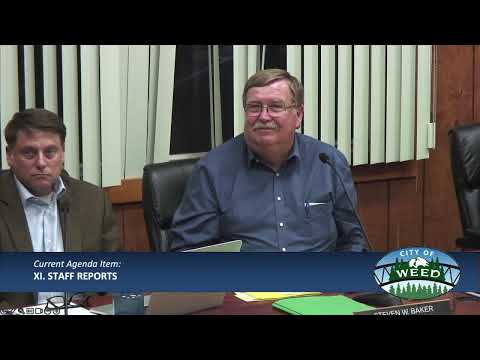
The presentation concluded with council members able to ask questions; the presentation is available on the city's meeting video archive.