Get Full Government Meeting Transcripts, Videos, & Alerts Forever!
Get email alerts on the Active Transportation topic
No spam. Unsubscribe anytime.
Commission reviews $11.8 million plan for Class 1 California Drive bike‑and‑ped path, warns of lost parking
Summary
Staff presented a concept for a roughly half‑mile, 10‑foot Class 1 shared path on California Drive that would connect Millbrae and Burlingame stations. The project is estimated at about $11.8 million with a $1.6 million grant; it would remove 41 parking spaces in the Caltrain lot and requires interagency agreements.
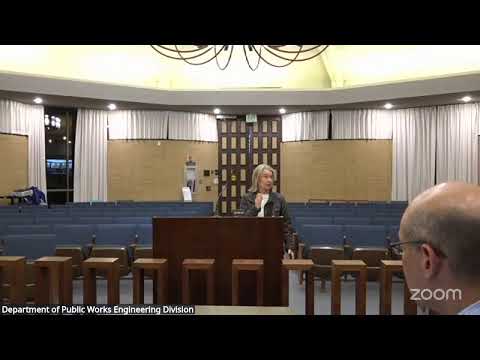
The Burlingame Traffic Safety and Parking Commission on Thursday heard a presentation on a proposed Class 1 bicycle and pedestrian facility on California Drive, a roughly half‑mile, 10‑foot shared path intended to connect Millbrae Station and Burlingame Station.
Mister Wong, representing the city engineering division, told the commission the project is estimated at about $11,800,000 and that the city had secured roughly $1.6 million in grant funding with a typical 10 percent local match. Wong said the grant covers the segment that stops near the train station; extending the facility farther will require additional negotiations and funding.
The design calls for a 10‑foot separated path (a Class 1 facility) removed from the roadway to be used by bicyclists and pedestrians. Wong said the city plans to push the alignment partly into the Caltrain parking lot to secure the required width, which would mean removing about 41 parking spaces. "By doing that, we lose 41 parking spaces in that lot," Wong said, adding staff are negotiating with the lot owner and other agencies about right‑of‑way and use.
Commissioners raised concerns about the station‑area terminus, describing the current parking lot and station approaches as congested and sometimes unsafe for pedestrians. One commissioner urged staff to study whether a parallel, quieter street could receive bicycle traffic to avoid the messy station area; Wong said additional grant opportunities and regional coordination (the Grand Boulevard initiative and other agencies) could inform that routing.
Commissioners also questioned parking impacts downtown and asked staff to explore parking‑preservation options such as angled or alternate parking layouts. Wong said staff will continue outreach — including public meetings, mailings and coordination with business groups — and will present detailed plans once design advances.
The commission did not take a vote on the project; staff described the presentation as an early‑stage briefing for newer commissioners and said they will schedule community outreach and return with refined plans.
Next steps: staff will set a public outreach meeting for the corridor, continue negotiations over use of the Caltrain parking lot, and refine design options to try to reduce parking impacts while preserving a 10‑foot Class 1 facility.