Lifetime Citizen Portal Access — AI Briefings, Alerts & Unlimited Follows
City-contracted attorneys train advisory bodies on Brown Act limits, social media rules
Loading...
Summary
City-contracted lawyers led a Brown Act training for local advisory committees covering open-meeting basics, serial-meeting traps ("daisy chain" and "hub-and-spoke"), AB992 social-media limits (including bans on member-to-member replies or reactions), and SB1100 authority for removing disruptive speakers.
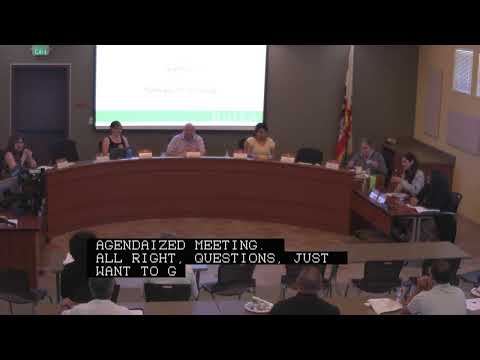
Deepa Sharma, an attorney with Burke, Williams and Sorensen who provides legal services to the city, led a midday Brown Act training for local advisory committee members and staff. The session began at 12:03 p.m. and covered when gatherings count as meetings, how to avoid impermissible "serial" contacts, and the limits on member interactions on public-facing social media.
"A direct quote from the Brown Act is that it is the intent of the law that the actions be that actions be taken openly and their deliberations be conducted openly, so that the public is aware of how you arrived at your decision," Sharma told attendees, summarizing the law’s purpose. She and a colleague encouraged members to use the training to issue-spot and to consult the city attorney’s office or their staff liaison when in doubt.
Trainers emphasized two scenarios that commonly create violations: the "daisy chain," where one-on-one conversations are passed along until a majority of members have effectively conferred, and the "hub-and-spoke," where an intermediary—such as a reporter, developer or member of the public—relays multiple members' views. Sharma advised attendees to ask colleagues whether they have already discussed an item before engaging and to avoid forwarding or replying-all on emails that could transmit deliberations outside a public meeting.
On social media, trainers reviewed AB992 changes and practical limits. "AB992 ... prohibits communication between members of a legislative body on a social media platform that's accessible to the public," a trainer said, adding that the prohibition extends to direct replies, reactions and even emoji when those interactions relate to matters within the body's jurisdiction. They noted AB992 is effective through 01/01/2026 as described in the session.
Attendees asked about gray areas—such as whether members can separately respond to an original public post without replying to a fellow member's comment—and trainers recommended caution: members may provide information to the public via public-facing platforms, but must avoid any member-to-member interaction on those platforms that would amount to deliberation.
The trainers also explained exceptions and practical responses for urgent items. In some limited emergencies—such as a narrowly defined emergency meeting or a short-notice grant deadline—bodies may lawfully act under special meeting rules, but routine last-minute additions to a regular agenda generally are not allowed without proper notice.
Sharma described differences between advisory and independent bodies, urging extra care for bodies with independent decision-making authority because decisions made outside proper procedure can be harder to fix later. She reminded members that violating the Brown Act can expose the jurisdiction to litigation, attorney fees and possible district attorney inquiries.
The session closed with a discussion of the presiding officer's duties: creating space for required disclosures (for example, ex parte contacts), managing public comment so it does not become a back-and-forth deliberation, discouraging sidebar conversations among members, and protecting due process for quasi‑judicial bodies. Trainers summarized SB1100 (effective 01/01/2023), noting it gives presiding officers authority to remove disruptive attendees after warning, and advised caution and staff coordination before taking that step.
Attendees were encouraged to direct follow-up questions to their staff liaisons; the group paused to take a photo at the end of the session.