Get Full Government Meeting Transcripts, Videos, & Alerts Forever!
Get email alerts on the Ncip Prioritization topic
No spam. Unsubscribe anytime.
Monterey NCIP committee reviews 35–38 deferred neighborhood projects as public urges preserving undergrounding credits
Summary
The Neighborhood Community Improvement Program committee reviewed a slate of inactive and not‑started projects after staff presented updated program statistics; public commenters urged protecting $4.7 million in PG&E undergrounding credits and prioritizing safety projects. The committee scheduled a final vote later in January.
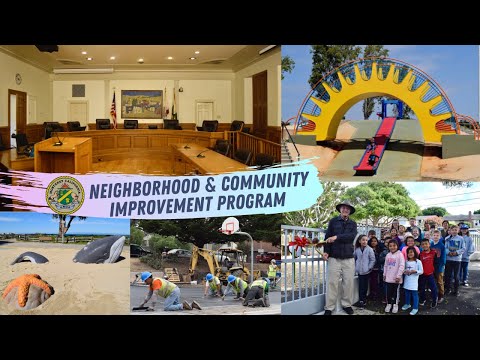
Monterey’s Neighborhood Community Improvement Program (NCIP) committee met to review a consolidated list of roughly 35–38 inactive and not‑started neighborhood projects and to prepare a prioritized recommendation for city council amid budget pressure.
City staff told the committee the NCIP added 105 projects in 2023–25 and completed 43, leaving roughly 62 projects active and about 80 on the books overall. Staff said the city council directed the committee at a special joint meeting on Oct. 13 to return a recommendation that would identify $3 million to $4 million in projects to freeze or reprioritize; staff noted voting on the full slate is possible and that projects labeled “inactive” or “not started” were presented for completeness (staff: speaker 7).
Why it matters: Committee members and many public commenters framed the exercise as a prioritization to help the city close a structural budget gap while trying not to abandon long‑standing neighborhood commitments. Several speakers warned that removing certain line items could forfeit matching or outside credits and create safety gaps for residents.
Public commenters — including neighborhood advocates and project nominators — repeatedly urged the committee to protect funding tied to undergrounding. Ray Myers, identified by the record as chair of a local undergrounding group (speaker 12), said NCIP previously approved $2,250,000 in seed money and that Monterey stands to lose about $4,700,000 in PG&E credits if the city withdraws its local contribution. “If the city of Monterey is unable to cover this additional cost, they’ll be subject to forfeiting this $4,700,000 of credits,” Myers said. Multiple speakers echoed the warning that a decision to deprogram NCIP underground funds could squander years of planning and outside credits (public commenters: speakers 12, 1, 11).
Residents pressed the committee to prioritize safety projects such as a lighted crosswalk at Webster/El Camino (project 3). Melissa Mannix (speaker 16) described daily crossings at that intersection as “incredibly dangerous” and urged members to protect projects with clear immediate safety benefits. Several commenters described recent power outages and argued undergrounding would improve resilience and public safety.
Committee members asked staff detailed process questions: whether an inactive project could be voted on (staff: yes), whether grant matches could be preserved if a project were defunded (staff said once funds are deprogrammed they would not be reserved for a later matching obligation), and how staff-derived color coding and vote/ranking data map to the packet. Staff identified one recent closed project that returned roughly $68,400 to NCIP and told the committee an attachment in the packet shows vote totals and ranking history for projects (staff: speaker 7).
Several members said their working principle should be “do no harm”: protect projects where proponents remain engaged and prioritize safety and matching‑fund projects. One member proposed drafting a short position statement to accompany the committee’s recommendation to council that explains the committee’s reasoning and priorities.
Process and next steps: Staff and the committee confirmed two more public review sessions are scheduled, with final committee voting set for Jan. 28 and the next NCIP meeting on 2026‑01‑21. No formal freeze or defunding votes on specific projects were taken at this session; the meeting did include a procedural vote to approve minutes from Oct. 22 and Nov. 5, 2025, which the chair declared passed.
What remains unresolved: Several public commenters and members flagged the undergrounding match and PG&E credits as a critical risk if NCIP funds are reallocated; staff advised that deprogrammed funds would not automatically be held for future matching, meaning projects removed now could lose eligibility for outside funds unless council chooses otherwise. The committee left open whether it would recommend taking the $3–$4 million from next year’s budget instead of freezing projects already approved by neighborhoods.
The committee adjourned at 7:36 p.m.; members will reconvene on 2026‑01‑21 and return to voting on Jan. 28.