Get Full Government Meeting Transcripts, Videos, & Alerts Forever!
Get email alerts on the Parking Policy topic
No spam. Unsubscribe anytime.
Residents push back on Richland Farms parking permits; council frames program as citywide safety response
Summary
Dozens of residents urged the Compton City Council to delay or terminate a pilot preferential/permit parking program in Richland Farms, citing low signups and alleged ordinance noncompliance; the council said the plan responds to citywide public‑safety and traffic issues and that enforcement will increase.
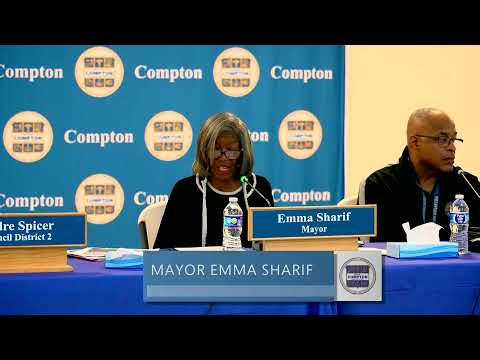
Dozens of residents used the meeting’s public-comment period on Dec. 16 to oppose a proposed preferential (permit) parking program in Richland Farms, arguing it threatens the neighborhood’s character, disproportionately affects Latino residents and was implemented before required thresholds in the municipal code were met.
Brenda Castello, a Richland Farms resident, cited Municipal Code Section 12.94 and told the council that only about 40 homes out of more than 400 had applied for permits — roughly 10% — and asked why signage had already been installed when the code requires at least 50% participation before signs are erected. “Only 40 homes have applied,” she said. “Why are the signs up already and installed if 50% of the residents haven't been issued permits? Why is the city not following its own ordinance?”
Other residents raised similar concerns: Daniel Sanchez, a recent homeowner in Richland Farms, said the program would unfairly penalize households that lack driveways or who rely on family visitors to feed animals, and asked for more notice and town-hall discussions. Residents also accused the council of racial bias in the rollout; one speaker urged that implementing the program without broader community consent would be “a racist act.”
City council members and staff responded that the parking plan is the product of a citywide traffic-management effort and was not targeted at one neighborhood. Council member Jonathan Bowers said enforcement activity has already increased and framed the program as addressing long-standing traffic-safety problems, including hazardous on-street parking and commercial trucks in residential areas. “This is about improving compliance and addressing long standing parking concerns in our neighborhoods,” Bowers said, adding that the city's approach will include additional signage, targeted enforcement of commercial trucks and trailers, and further community meetings.
Separately, Marcelo Castillo, operations director for IPS, asked the council to address traffic-safety issues on Victoria Street, reporting multiple serious collisions — including a fatality last June — and requesting speed controls and clearer markings where large vehicles and containers block sightlines.
The council did not adopt an immediate policy change at the meeting. Council members said they will continue outreach and town halls, and Bowers requested installation of no‑parking and no‑dumping signs in some alleys, additional signage to clarify street‑sweeping schedules, and a focused effort to enforce commercial-vehicle restrictions. Staff did not provide a timeline for rescinding or delaying the Richland Farms pilot; residents asked the council to consider petitions and the ordinance’s 60‑day thresholds.
Votes taken on routine business during the meeting (consent agenda and authorization for travel for selected officials to League of California Cities training in January) were approved without the substantive parking moratorium residents sought; the council recorded the consent‑agenda approval and the travel authorization during the regular agenda.