Get Full Government Meeting Transcripts, Videos, & Alerts Forever!
Get email alerts on the Community Engagement topic
No spam. Unsubscribe anytime.
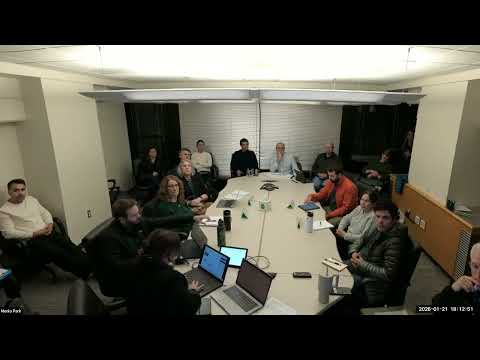
EQC subcommittee outlines three-pronged approach to boost Menlo Park climate engagement
Summary
An EQC ad hoc subcommittee proposed boosting climate action engagement through (1) enhanced use of city communications, (2) a stakeholder task force and (3) targeted canvassing/door-to-door outreach; commissioners recommended partnering with trusted local groups and Peninsula Clean Energy.
A Menlo Park Environmental Quality Commission ad hoc subcommittee on Wednesday presented early-stage ideas to increase community engagement around the city's climate action plan, proposing a three-pronged approach: strengthen existing city communications, convene a stakeholder task force, and meet residents and businesses where they are through targeted outreach campaigns.
Subcommittee members (including Commissioner Kissel and Vice Chair Meyer) described a spectrum of strategies. The first strategy focuses on "enhanced business as usual": amplifying the city's weekly digest, website, social media and event outreach with clearer, more action‑oriented messaging. The second proposed strategy is a more formal stakeholder task force or series of roundtables that would bring renters, homeowners, commercial property owners, schools, faith groups, youth programs, Stanford University and nonprofits together to set priorities and identify barriers to achieving climate action goals. The third strategy emphasizes community canvassing, small business outreach and targeted in-person meetings "to meet people where they are."
Speakers and commissioners repeatedly recommended message testing and simple, human-focused communications: short videos featuring local residents, framing actions in terms of affordability, health and immediate benefits rather than technical climate jargon, and translating materials into multiple languages. Commissioner comments referenced outside models (Portola Valley, San Luis Obispo) that use citizen-led forums or story-driven campaigns to draw participation.
Brian Schmidt (identified as representing Mineral Sparks in the public record) told the commission his organization would partner with the city to amplify outreach and recommended separating contentious subjects (such as a separate downtown parking initiative) from baseline engagement so the climate conversation is not conflated with other controversies. Peninsula Clean Energy programs and local nonprofit partners were named repeatedly as likely collaborators.
Commissioners also discussed practical barriers: sustained outreach requires staff time and funding, meeting spaces and modest incentives (food, stipends) to encourage participation, and clear, actionable asks for volunteers and stakeholders. Several commissioners suggested the city could fund or contract with local nonprofits to run community engagement programs and recommended documenting engagement requests in future planning reports.
Next steps: the EQC will continue work with the subcommittee, meet with the city's public information officer and plan additional briefings; staff announced a special EQC meeting on Feb. 26 to accommodate upcoming subcommittee reports and related items.