Get Full Government Meeting Transcripts, Videos, & Alerts Forever!
Get email alerts on the Parks And Recreation topic
No spam. Unsubscribe anytime.
San Bruno council hears parks assessment finding two-thirds of assets need near‑term work
Summary
City consultants told the San Bruno City Council that about 66% of park assets are in fair-to-poor condition and recommended a prioritized action plan; staff and council asked for cost estimates and next steps while residents urged quicker action on hazardous trees and neighborhood safety.
San Bruno City Council on March 25 received an update on a citywide parks assessment that found roughly two-thirds of park assets will require near‑term intervention or replacement.
Lauren Ivy Thomas, project manager with consulting firm MIG, told the council the assessment inventoried 19 active recreation sites and about 190 physical assets. "About 6% of your park assets are in excellent condition, 24% are in good condition, 36% are in fair condition and 30% are in poor or nonfunctional condition," Thomas said, summarizing the team’s on‑site ratings. "So 66% of your park system assets are in a near term—they need intervention soon or very soon." (Lauren Ivy Thomas, MIG)
The consultant also reported results from a city survey that ran six weeks and drew more than 1,000 responses, roughly 90% from San Bruno residents. Thomas said survey respondents visit parks frequently—about 80% reported using a park more than once a week—and prioritized repairing and replacing old amenities, adding a greater variety of features, and improving paths and trails. She said most respondents favored smaller, distributed investments across neighborhoods rather than a single large project.
Why it matters: Council members and staff said the assessment provides a data‑driven starting point for prioritizing capital investments. The consultant emphasized these are "key directions," not finalized recommendations; the study will be refined into a prioritized action plan and a list of capital projects with cost estimates for future council consideration.
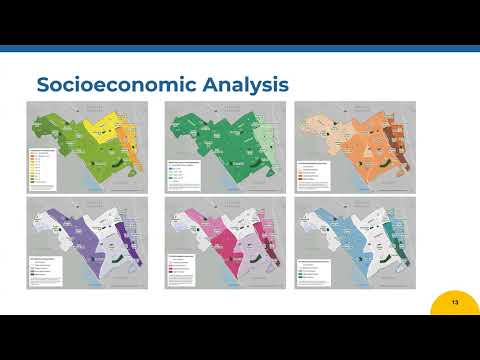
Inventory and equity findings The assessment categorized park assets (athletic fields and courts, major/specialized features, play and outdoor‑recreation amenities, support infrastructure and trails) and included demographic and health mapping. Thomas said the city’s east side shows greater socioeconomic and public‑health needs—higher pollution exposure, higher poverty rates, lower tree canopy and higher reported social isolation—though the consultant noted that many east‑side parks are being maintained well despite aging assets. The team also ran a supplemental noise‑pollution analysis after field visits.
Council questions and staff responses Council members pressed for clarity on how perceptions in the survey may be affected by recently renovated sites, how safety concerns were measured, and which facilities are city‑owned versus district or private. Staff and the consultant reiterated the assessment measured city‑owned assets only and said the condition ratings focus on physical function (life cycle and maintenance needs) rather than subjective aesthetics. When asked about play‑equipment history, staff reported that many playgrounds were last replaced in the mid‑2000s (2005–2007 in some cases) and that accessibility upgrades will be part of future planning.
Site‑specific notes Thomas called out Commodore Park’s enclosed dog‑park area as receiving especially negative public feedback because of its size and condition, and she recommended the council consider accessibility upgrades, a playground replacement schedule, and improvements to athletic facilities. She also suggested pursuing green‑infrastructure strategies to buffer noise and filter pollution and to improve natural water‑management in parks.
Public comment and other concerns During public comment on the same agenda topic, residents urged quicker action on hazardous trees on easements and described repeated requests to public works that they said went unanswered. One resident said multiple trees have fallen and asked the city to inspect and trim trees before storms; another urged solutions for speeding on neighborhood streets. Staff noted they would record the complaints and follow up.
Votes and next steps Council did not adopt capital projects at the meeting. Staff said the next steps are to refine recommendations, attach cost estimates to priority projects, and return with a prioritized action plan for council review and possible funding decisions.
Votes at a glance - Consent calendar (items a–g): approved unanimously, 5–0. (motion to approve consent; vote recorded by clerk) - Resolution adopting an updated publicly available pay schedule (effective Jan.13, 2025): approved unanimously, 5–0. (staff presented retroactive and FY26 costs; motion/second recorded and passed)
The council adjourned the special meeting and scheduled its next regular meeting for April 8, 2025.