Get Full Government Meeting Transcripts, Videos, & Alerts Forever!
Get email alerts on the Land Use Vacant Buildings topic
No spam. Unsubscribe anytime.
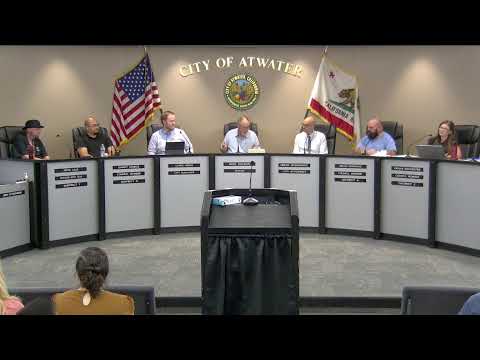
Atwater council asks staff to study vacant commercial-building ordinance after public debate
Summary
After a staff presentation reviewing other cities' approaches, Atwater City Council voted to direct staff to study a vacant commercial building ordinance, including staffing, fees and enforcement options; the council emphasized targeting problem properties and considering incentives rather than citywide penalties.
The Atwater City Council on July 14 directed staff to study the feasibility of a vacant commercial building ordinance and return with more detailed recommendations within roughly two months.
Community Development Director John O'Connor told the council the proposal would require registration, maintenance standards, security measures and inspections and could include annual fees, escalating fines and civil penalties. He reviewed examples from Pasadena, Santa Cruz, Vallejo, Richmond and Berkeley and warned that enforcement could be resource-intensive and that the ordinance might face legal or political pushback if not carefully tailored.
"If we go down this road, there may be unintended consequences," O'Connor said, urging the council to weigh staffing and budget implications and to consider a program crafted specifically for Atwater rather than copying other cities. He recommended the council request more information on budget implications and staffing (option 2) before drafting an ordinance.
Councilmembers and members of the public debated the scope and goals of any ordinance. Councilmember [Council discussion recorded as by the council] cited safety and blight along Atwater Boulevard and other corridors, saying vacant properties can depress nearby property values and deter new investment. Other councilmembers urged caution, arguing the city already struggles to enforce existing rules and that a program should aim at absentee or out-of-area owners rather than responsible property owners.
Residents and business owners who spoke during public comment supported targeting problem properties but asked for incentives alongside penalties. Adam Reed, president of Old Town Atwater, said he supported measures that address visible blight while exempting well-maintained vacant properties and suggested incentives such as waived permit fees to encourage reuse.
John O'Connor told the council the department is currently short-staffed and recommended the study identify whether responsibility should sit with code enforcement or the building department and whether zoning or geographic targeting (for example downtown or Atwater Boulevard) would make sense. He estimated two months for an in-house study of staffing and budget implications.
After public comment, the council voted on a motion to pursue option 2 (request more information). The motion passed with a recorded vote: Kale yes; Rochester yes; Raymond no; Ambrees yes; Nelson yes.
Next steps: staff will return with a staffing and budget analysis and draft options for registration deadlines, fees and enforcement measures for council consideration.