Get Full Government Meeting Transcripts, Videos, & Alerts Forever!
Get email alerts on the Water Safety topic
No spam. Unsubscribe anytime.
Nevada City approves first reading of backflow-prevention code update to meet state rules
Summary
The council conducted a public hearing and approved first reading of an ordinance replacing chapter 13.12 on backflow prevention to align Nevada City code with state regulations; staff said the change focuses inspections on commercial cross‑connections and requires annual testing and a cross‑connection control specialist.
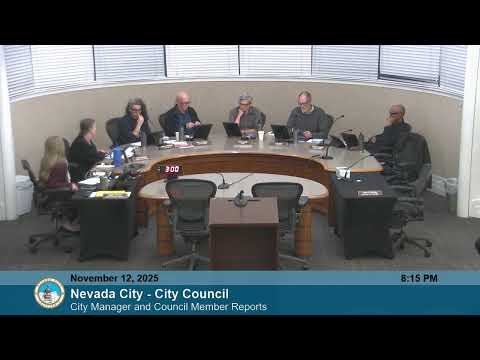
The Nevada City Council on Nov. 12 approved the first reading of an ordinance to replace chapter 13.12 of the municipal code on backflow prevention, a technical update staff said is required to comply with recent state standards.
Staff member Brian (speaker 16) told the council the revision is intended "to bring our code in compliance with state regulations" and to reduce the risk that cross‑connections — for example from fire‑sprinkler lines or swimming pools — could contaminate the city's water supply. He said the update will require annual inspections and the city will contract with a cross‑connection control specialist to help manage compliance.
Council members and speakers framed the change as regulatory: "This is a technical update, not a policy shift," said Council member Daniela Fernandez (speaker 3). Council members asked how costs would affect constituents; staff said the direct testing and certification obligations apply primarily to private commercial systems and to city zone inspections, not to single‑family home plumbing. "It's for commercial businesses," Brian said when clarifying who would bear most inspection costs.
The council read the ordinance by title and approved the first reading in a roll‑call vote. Staff and councilors noted a second reading and final adoption will be scheduled at a later meeting; the first vote does not enact the ordinance. Staff also said the city will provide more detail on expected inspection costs as the consultant work proceeds.
The public hearing record included general support for stronger protection against water contamination and no requests for substantive amendments to the text presented at first reading. The council closed the hearing after public testimony and took the procedural first‑reading vote.
Next steps: staff will return with the ordinance for second reading and adoption and will supply more specific cost estimates and a timeline for implementation as the cross‑connection control specialist is engaged.