Get Full Government Meeting Transcripts, Videos, & Alerts Forever!
Get email alerts on the Waste Management Sb1383 topic
No spam. Unsubscribe anytime.
EQC hears county update on SB 1383 compliance, edible food recovery efforts
Summary
Menlo Park sustainability staff and San Mateo County presenters told the Environmental Quality Commission that SB 1383 implementation is advancing — vendors and multi‑family properties are being enrolled, waivers and enforcement letters are used for noncompliance, and county programs are expanding edible food recovery capacity and pilots.
Menlo Park — The Environmental Quality Commission heard two presentations on Feb. 26 about local work to implement California’s SB 1383, the state law that requires diversion of organic material from landfills and expanded edible food recovery.
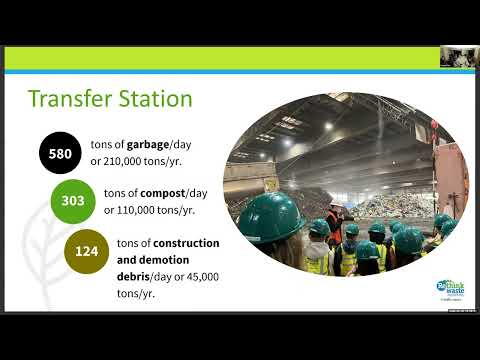
Raymond Chung, recycling compliance program manager, described the JPA’s operations and the Shoreway Environmental Center’s role in collecting and processing organics. Chung emphasized practical compliance steps for residents and businesses — subscribing to organics service through the franchise hauler, using color‑coded containers and correct signage — and explained that the city is sending notice‑of‑violation letters when required by the state. He said those letters give recipients 60 days to correct service and warned that local fines may follow unchanged noncompliance.
“The key is to not have food waste or any of that waste in the garbage,” Chung said, summarizing the law’s intent and local compliance steps. He told businesses that waivers are available if they truly generate no food or landscaping waste, and described a physical‑space waiver for sites that cannot practically add a cart — waivers that expire after five years, at which point the site must provide service.
Jack Steinman, a sustainability specialist with San Mateo County, framed edible food recovery as both a climate and a food‑security strategy. Steinman said the county’s coordinated program and MOUs with cities support nonprofits that collect and redistribute surplus safe food; he described $3 million in investments and millions of pounds diverted from landfills since the county program began in 2018.
“Edible food recovery is the collection of safe surplus food that would otherwise go to waste,” Steinman said, adding that recovered food is distributed through nonprofits to people in need and that community fridge pilots and other efforts are being explored to increase access.
Commissioners asked for technical clarifications — which containers and coated papers are acceptable in compost, how the waiver and inspection process works for businesses, whether the state funded implementation, and whether specialty plastics or thin‑film plastics are accepted. Presenters said some commercially compostable plastics and coated foodservice items do not break down in local processes, urged use of BPI‑certified compostable bags where appropriate, and said the state delegated most implementation responsibility to local jurisdictions though limited grants are available.
Chung reported local compliance gains after targeted outreach and notices: apartment and business enrollment rates rose from the high‑80s to the high‑90s percent range within a year of heightened enforcement outreach, a trend he said the JPA and haulers continue to support.
The commission took no formal action on SB 1383 at the meeting; staff and county partners requested continued coordination on outreach, waiver processing and building capacity for edible food recovery. The EQC will receive future updates as city staff and county partners develop enforcement and volunteer/ nonprofit support plans.