Citizen Portal
Sign In

Burlingame staff outline wide-ranging zoning code text amendments to implement housing policies and speed reviews

City of Burlingame Planning Commission · June 24, 2025

Loading...

AI-Generated Content: All content on this page was generated by AI to highlight key points from the meeting. For complete details and context, we recommend watching the full video. so we can fix them.

Summary

Planning staff presented proposed zoning code text amendments to implement the housing element and streamline review: lot consolidation incentives, parking exemptions near qualifying transit stations, incentives for larger affordable units, longer deed‑restriction terms, and potential removal of the automatic study‑session requirement. Commissioners asked for data and safeguards before formal adoption.

Staff presented a series of proposed zoning code text amendments aimed at clearing inconsistencies, implementing housing‑element commitments and streamlining the Planning Commission’s review process. Neda (staff member) said the formal ordinance package is expected in fall and will move to City Council before the end of the year.

The staff presentation called for three broad actions. First, a lot consolidation program would enable small, otherwise undevelopable parcels to be merged (staff noted a 0.5‑acre threshold as a guide) and include incentives for affordable projects such as modestly reduced setbacks. Second, in a package tied to HB4 and state law, staff proposed aligning lot‑coverage standards across mixed‑use and higher‑density residential zones, removing parking requirements for certain ADA‑accessible units, and codifying the state exemption that eliminates parking requirements for development within a half‑mile of qualifying major transit stations (staff cited Burlingame and Broadway/Millbrae as the relevant stations).

"We will need to clean up typos and inconsistencies across the code and then bring forward the housing‑element implementation items," staff said, adding the parking near‑transit rule already reflects state law. Commissioners asked staff to confirm which bus stops or corridors might meet state thresholds for major transit stops and to return with specific numeric edits.

Third, staff proposed incentives to encourage larger family‑sized affordable units and to revisit the duration of deed restrictions on subsidized housing. Under current practice, rental deed restrictions run 55 years and ownership restrictions 45 years; staff recommended studying an in‑perpetuity approach while preserving an in‑lieu fee option and objective triggers for any rare future removal. "Deed‑restricting units in perpetuity provides more clarity," staff said, while acknowledging tradeoffs for project feasibility and investor expectations.

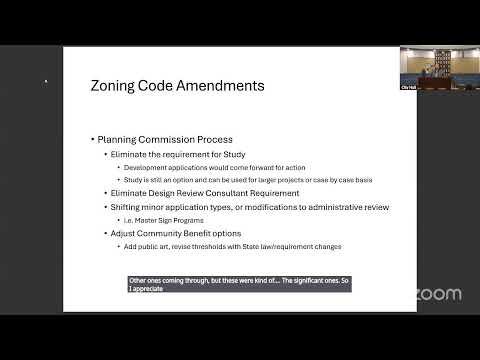
Beyond substantive housing measures, staff proposed process reforms: moving away from a hard requirement that every application first appear at a study session so that applicants in good shape could be acted on in a single hearing; shifting some minor application types to administrative review; and exploring whether the city should retain design‑review consultants centrally rather than requiring applicant‑paid consultant fees in select cases.

Commissioners generally supported the goals but asked for more data and guardrails. One commissioner requested historical data showing how many items are continued from study to action and what types of projects use design consultants; another warned that eliminating the study‑session requirement would change noticing and public‑engagement expectations and asked staff to detail how notice and the public’s opportunity to comment would be preserved.

Staff said they would return with draft text, numeric thresholds and implementation options for further public hearings later this year. The commission did not take action on the code changes at this meeting; the presentation served as a daylighting session for the forthcoming ordinance package.