Get Full Government Meeting Transcripts, Videos, & Alerts Forever!
Get email alerts on the Facilities Policy topic
No spam. Unsubscribe anytime.
Committee narrows use-of-facilities policy: limited free hours for community groups, debate over public access
Summary
Policy Review Committee members debated community access and proposed fee changes for use of district facilities, settling on a framework that waives some custodial fees for select nonprofit groups while applying fees more broadly; the committee directed administration to finalize a consolidated fee schedule for April review.
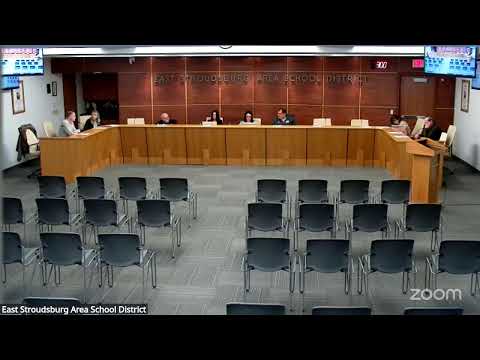
The Policy Review Committee spent the bulk of its meeting on proposed revisions to the district’s use-of-facilities policy, debating whether fields and playgrounds should be freely accessible to the public and how to structure fee waivers for nonprofit and school-related groups.
Keith Corcos, chair, said the draft would add that personnel fees shall be incurred by the applicant and that use of school facilities may not be permitted when schools are closed per the district calendar, with exceptions for emergency uses such as Red Cross operations. The committee agreed to clarify the phrasing from "when schools are closed" to "when the district is closed" to reduce confusion for applicants and staff.
Committee members discussed four user classes in the draft. Class 1 (district-sponsored events) would receive fee waivers; Class 2 (school-related organizations such as PTOs) and Class 3 (local nonprofits with offices in Monroe or Pike counties) were given differentiated treatment. The draft language and committee discussion established these working clarifications:
- Class 1: facility and personnel fees waived for district-sponsored organizations. - Class 3: Saturday custodial fees waived for the first event per school year, a single use consisting of up to four consecutive hours; events exceeding four hours or additional events will be charged at established Saturday labor rates (regular or overtime plus benefits). - Class 2 (PTOs): members debated returning PTOs to an historical practice of one 8-hour event free; the committee leaned toward providing Class 2 up to 16 hours per year (effectively two 8-hour events or multiple events totaling 16 hours), with a 4-hour minimum per booking and a practical cap discussed at 8 hours per single event.
Speakers raised practical concerns: routine public access raises safety and vandalism risks, who would monitor facilities if fields and playgrounds were left open, and the district’s liability exposure. Committee members noted that internal athletics and district-sponsored practices would be treated differently from third-party use and that camera monitoring and clear sign-up procedures could be used to limit problems.
The committee discussed the need to itemize technical staffing costs in the fee schedule when users require stage lights, scoreboard operators, or food-service staff. Insurance requirements also drew attention: the draft references an insurance certificate and committee members questioned whether a $500,000 minimum is adequate in some cases; they directed administration to specify required coverage amounts based on event type.
After extended discussion, the committee favored Option 2 (fees apply) and asked administration to compile a consolidated schedule and to return a cleaned-up policy in April for final consideration. Corcos said the committee aims to implement the revised structure on July 1.