Get Full Government Meeting Transcripts, Videos, & Alerts Forever!
Get email alerts on the Capital Improvements topic
No spam. Unsubscribe anytime.
San Bruno reviews draft $34.5M CIP; staff propose two engineering hires to reduce consultant reliance
Summary
City staff presented the draft FY2025–26 Capital Improvement Program, highlighted a data‑driven prioritization pilot and proposed adding one senior and one associate engineer (funded by CIP/enterprise funds) to reduce consultant reliance and improve project delivery.
City officials presented the draft fiscal year 2025–26 Capital Improvement Program to the San Bruno City Council on April 22 and asked for council direction ahead of a public hearing and final adoption scheduled for June.
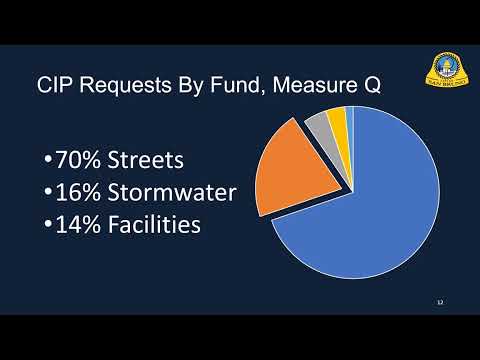
Matt Lee, the city’s Quality Works director, framed the session as an effort to pull back the curtain on how projects are selected and funded. Staff said the amended CIP budget stands at about $172 million, with roughly $69 million spent to date and about $34.5 million in proposed projects for the coming year, the majority funded through enterprise funds (water and wastewater) and a Measure Q tranche intended primarily for streets and the pavement management program.
The presentation described a prioritization pilot, approved in January 2024, that scores project nominations using 10 objective criteria — equity; health and safety; asset condition; economic prosperity; environment; strategic initiatives; mandates; funding; collaboration; and shovel readiness. “The pilot ensures decisions are equitable, data driven, and aligned with community priorities,” management analyst Anna Morales said.
Public works engineering staff described current workloads and a plan to rebalance project delivery. "Our CIP staff are currently managing about 64 active projects," principal civil engineer Zoe Manowis told the council, noting engineers were managing more projects than recommended industry practice and relying on consultants to meet demand. Manowis presented a three‑year cost comparison showing consultant support equivalent to roughly six full‑time project engineers. "The cost of using consultants — including consultant fees and staff oversight — was estimated around $12,000,000, whereas the estimated cost for the same level of effort using permanent staff would have been $7,000,000, resulting in a potential savings of $5,000,000," she said.
To reduce long‑term consultant dependence while preserving capacity to handle peaks, staff proposed adding one senior engineer and one associate engineer to provide design oversight and team leadership. Staff emphasized those positions would be paid from CIP projects and enterprise funds rather than the general fund.
Council members pressed for more digestible project‑level information and clearer public‑facing descriptions so residents can see what the city is planning to build and how funds will be spent. Staff committed to publishing a more detailed project summary in the CIP digest ahead of the June hearing.
The council received the draft and directed staff to return with additional project detail and the formal budget hearing materials in June.