Get Full Government Meeting Transcripts, Videos, & Alerts Forever!
Get email alerts on the Insurance Policy topic
No spam. Unsubscribe anytime.
State insurance rules to require wildfire-risk transparency and discounts; insurers’ market exits and FAIR Plan role worry residents
Summary
The California Department of Insurance outlined a 'Safer from Wildfire' framework that requires insurers to share wildfire risk scores and offers discounts for mitigation; speakers warned the changes may increase availability but not affordability and advised residents on appeals and resources.
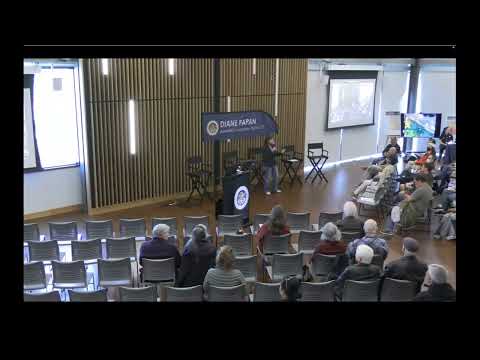
The California Department of Insurance told a San Bruno audience that new regulations will require insurers to disclose wildfire risk scores to policyholders and offer explicit discounts for documented home‑hardening and defensible‑space actions, while a larger sustainable-insurance strategy aims to allow forward‑looking catastrophe models and California‑only reinsurance in rate filings.
"Insurance companies are leaving the state," Lisa Strange, the Department of Insurance’s Northern California outreach manager, told attendees. She summarized market pressures—more frequent disasters, rising rebuild costs, and tighter reinsurance markets—and said the department’s reforms are designed to stabilize availability by allowing insurers to use forward‑looking modeling if they commit to increase coverage in distressed areas.
Under the "Safer from Wildfire" regulation, homeowners who take specified measures (Class A roofs, ember‑resistant vents, cleared vegetation and community mitigation designations such as Firewise) may be eligible for discounts; the FAIR Plan will also offer discounts for community mitigation designations. Strange said discount amounts vary across carriers and urged homeowners to work with agents and use the department’s online tools.
United Policyholders representative Joel described how insurers now often use aerial imagery and proprietary, home‑by‑home scoring—factors that can produce stark differences in premiums between neighboring houses. He reported that recent rate filings showed an average San Bruno increase of about 18.3 percent in a recent filing, stressing that averages mask wide variation across individual policies.
On FAIR Plan solvency, the department and United Policyholders said the FAIR Plan maintains loss reserves, reinsurance and the statutory ability to assess member insurers; the department is exploring assessment options and will notify consumers if policy changes are needed. Residents were instructed to file a request for assistance with the Department of Insurance if discounts are not applied or if they receive unexplained nonrenewals.
Panelists recommended practical next steps: homeowners should document mitigation actions, appeal insurer risk scores if they appear to be based on incorrect data, inventory personal property for claims, and contact local fire authorities and FireSafe programs to learn about chipper programs and grants.