Get Full Government Meeting Transcripts, Videos, & Alerts Forever!
Get email alerts on the Municipal Finance topic
No spam. Unsubscribe anytime.
Thornton presents preliminary 2025 financial results; PFAS receipts and sales-tax shortfall highlighted
Summary
Finance staff reported preliminary 2025 results: general government revenues were modestly above budget after timing adjustments; the water fund reflected timing and connection-fee shifts and the city reported $9.9M in PFAS litigation receipts (with an additional ~$6M expected). Staff noted sales tax came in about $3.3M below budget and outlined next steps including audit close and updated 2027 projections.
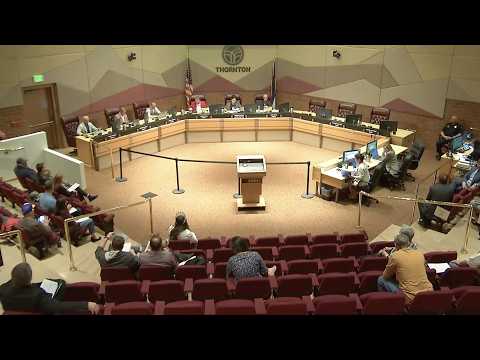
Thornton’s finance and budget teams presented preliminary year-end results for 2025 at the council meeting and flagged key items that will shape the 2027 budget outlook.
Finance Director Kim Neuhart said general government revenues finished about $11.2 million over the original 2025 budget but that most of that variance stems from timing and revenue-recognition shifts. “After adjustments, we’re off approximately $2.3 million, or about 1%,” Neuhart said.
The water fund finished notably over its original budget percentage-wise, a result the city attributed to timing of a large debt issuance that was pushed into 2026, earlier collection of connection fees (about $11 million more than budgeted because of administrative timing) and stronger-than-expected interest earnings. Neuhart also told council that the city received $9.9 million in PFAS litigation proceeds in 2025 and expects roughly $6 million more over the next four years; staff said those receipts were not known when the 2025 budget was adopted.
Budget Director Erica Senna reviewed expenditures: operating funds ended the year under budget overall, with about $9 million in general fund savings driven largely by personnel vacancies and $2.6 million in timing-related contractual services savings. Senna said personnel savings included downstream benefits such as lower retirement and health-insurance costs tied to higher-than-budgeted vacancies.
Council members pressed staff on two near-term risks: drought-driven reductions in water consumption and a sales-tax base that fell short of projections. Neuhart said a 10% reduction in water consumption would translate to roughly $6.65 million in reduced water revenue under a simple averaging example and that the team has baked recent variances into forward projections. On sales tax, staff reported a $3.3 million shortfall compared with the budget assumption (3.3% below the expected growth) and noted that some one-time audit recoveries covered part of the gap in 2025.
Neuhart said auditors will complete the year-end close and the independent audit is scheduled to be presented to council on June 9; staff will incorporate the preliminary results into 2027 budget modeling.
Key figures cited in the presentation include: general government revenues about $11.2M over the original budget (mostly timing); water fund variances driven by timing and $11M in connection fees collected earlier than planned; $9.9M PFAS receipts in 2025 with an estimated $6M to follow; sales tax about $3.3M below budget; 477 residential permits in 2025 (versus an expected 350) with projections of 625 for 2026.
Council directed staff to provide more granular sales-tax analysis and a breakdown of vacancy impacts on first-responder staffing and overtime.