Get Full Government Meeting Transcripts, Videos, & Alerts Forever!
Get email alerts on the Education Behavior Pbis topic
No spam. Unsubscribe anytime.
Principals outline districtwide PBIS program; Prairie Queen shares check‑in/check‑out results
Summary
Elementary principals and district PBIS leaders presented the Papillion La Vista Community Schools tiered PBIS model, describing universal Tier 1 practices, Tier 2 interventions such as check‑in/check‑out and plans for Tier 3 supports. Prairie Queen elementary reported 23 students on the check‑in program since August (~5% of its population).
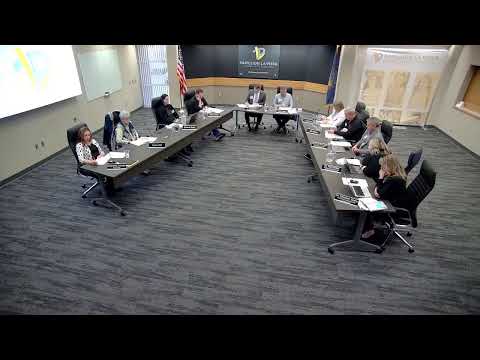
At the March 23 board meeting, elementary principals and district PBIS leaders described Papillion La Vista Community Schools’ tiered Positive Behavioral Interventions and Supports program and the district’s reliance on classroom‑level teaching of social‑emotional skills.
The presentation, led by Doctor Suri and five elementary principals, explained the district’s Tier 1 universal practices — branded as “Skills for Success” — and how those lessons are built into kindergarten through sixth‑grade routines. "Every student in every building in Papillion La Vista has access to these essential core practices," a principal said, describing classroom lessons that reinforce self‑awareness, self‑management, social awareness, relationship skills and responsible decision‑making.
Why it matters: the PBIS framework is the district’s primary behavioral support system and is intended to reduce office referrals, improve classroom climate and support attendance and learning. District leaders told the board that consistent language districtwide helps teachers, students and families align expectations.
Principals described Tier 2 supports such as check‑in/check‑out, a brief daily monitoring and feedback system that pairs students with a trusted adult. Prairie Queen Elementary shared school data: 23 students have participated in check‑in/check‑out since August (about 5% of that school's population), supported by roughly 20 staff facilitators and two coordinators; 11 students have exited the intervention after meeting exit criteria, 10 are showing a positive response, and 2 have moved to a modified (intermediate) level. "Out of 23 students, we've had 11 students that have graduated off the program because there is exit guidelines," a Prairie Queen staff member said.
Principals emphasized data collection and personalization: hourly tracking, color‑coded spreadsheets and brief take‑home slips that keep parents informed. Board members asked how the district communicates with families; principals said they intentionally send only a brief summary of goal attainment home to focus on strengths and maintain motivation. The PBIS leadership team is developing fidelity checks, training modules and a Tier 3 work group to plan supports for students who need more intensive services.
The presentation also covered staff development and engagement strategies: involving whole staff in refining referral and flow sheets, offering brief social media‑friendly parent tips and using small, frequent celebrations to sustain staff buy‑in. A board member asked about restorative practices; principals said restorative circles are being used in pilot buildings and require multi‑day training and follow‑up, with mixed implementation across sites.
The district indicated next steps include refining Tier 2 data collection, creating fidelity tools similar to academic intervention checks and forming a Tier 3 work group to support students who need higher levels of intervention.