Get Full Government Meeting Transcripts, Videos, & Alerts Forever!
Get email alerts on the Ceqa Overview topic
No spam. Unsubscribe anytime.
Los Gatos council, planning commission receive CEQA refresher from consultants
Summary
David J. Powers & Associates presented a CEQA overview to a joint Town of Los Gatos council and planning commission meeting covering discretion, baselines, thresholds, mitigation, exemptions and recent statutory changes such as SB 743's move to VMT.
David J. Powers & Associates gave a technical briefing on the California Environmental Quality Act to a joint Town of Los Gatos council and planning commission special meeting, laying out how local agencies should determine when projects require environmental review and how to shape analyses to withstand legal challenge.
Kony Danielson, president of David J. Powers & Associates, told elected officials that CEQA's primary functions are to provide information to decision makers, facilitate public participation and coordinate with other agencies. "The point is to understand what's out there now in the environment and then understand how the project would change it," Danielson said, summarizing the law's informational focus and the courts' role in policing CEQA documents.
The presenters highlighted several core concepts officials must apply when reviewing development proposals. They described "discretion" as the threshold question: CEQA applies when a public agency has the choice to approve, modify or deny a project that causes direct or reasonably foreseeable physical change to the environment. Danielson illustrated how local policies can change analysis outcomes, using tree-protection ordinances to show why similar projects in different cities can be evaluated differently.
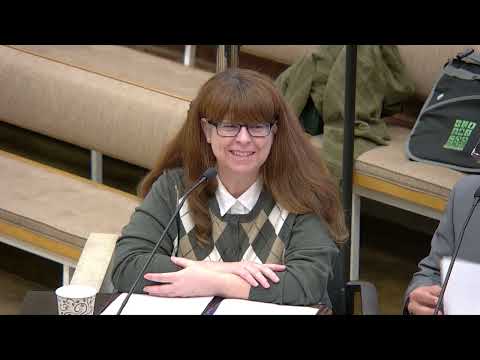
Shannon George, the firm's vice president and principal, reviewed baselines, thresholds and mitigation monitoring. She said baselines are typically the existing conditions frozen at the start of review and warned jurisdictions to adopt thresholds supported by evidence. On mitigation she stressed that measures must be "clearly stated, objectively measurable where quantitative thresholds exist, verifiable and enforceable," and that mitigation cannot be satisfied merely by requiring additional study.
The consultants reviewed levels of review: statutory and categorical exemptions, initial study leading to a mitigated negative declaration, and environmental impact reports (EIRs). They noted that while EIRs require a broader alternatives analysis and longer public review, both EIRs and initial studies rely on substantially similar technical analyses; the procedural differences affect litigation risk and public participation.
They also summarized a key statutory change: SB 743 replaced vehicle-level-of-service metrics with vehicle miles traveled (VMT) for CEQA transportation analysis. Danielson and George said that although congestion and aesthetics remain important local policy considerations, they are no longer CEQA triggers in the same way, though any physical changes resulting from traffic mitigation (for example tree removal to widen an intersection) remain CEQA-relevant.
Throughout the session, commissioners and council members asked how to balance CEQA discretion with competing state laws and when an agency should elect an EIR for risk management. The consultants advised relying on substantial evidence, tying mitigation to permits for enforceability, and using mitigation monitoring and reporting programs to document responsibilities and verification.
The training closed with a reminder that CEQA documents should be adequate but readable: "Analysis is not about being exhaustive; it's about giving decision makers and the public the information they need," Danielson said. The presenters did not review every planned slide and committed to follow up on remaining material at a later meeting.