Get Full Government Meeting Transcripts, Videos, & Alerts Forever!
Get email alerts on the Public Safety Surveillance topic
No spam. Unsubscribe anytime.
Law enforcement official defends Flock Safety license‑plate reader program as council approves contract
Summary
The Sonoma City Council unanimously authorized a contract amendment with Flock Safety to continue using automated license‑plate readers. A law‑enforcement presenter said data are retained 30 days, access is auditable and revocable, and the system has aided local investigations.
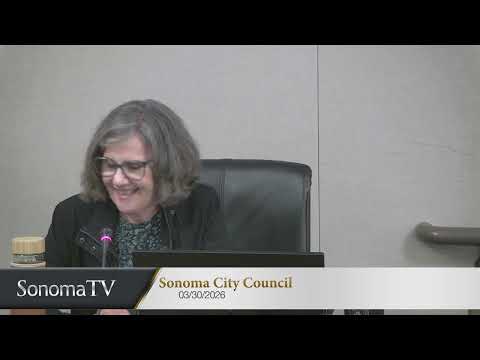
A law‑enforcement official presented the city27s use of automated license‑plate readers (ALPR) from Flock Safety and the City Council on March 30 unanimously authorized a resolution allowing the city manager to execute a multi‑year contract amendment to continue the program.
Why it matters: ALPR systems are drawing state and national attention for privacy concerns and interagency access. Council members pressed staff about who can query Sonoma27s data, how long it is retained, and whether out‑of‑state or federal agencies can access the system.
The presentation and mayoral exchange: At the start of the item the presenter (speaker S17, a law‑enforcement official) walked council through applicable state law, citing California Civil Code sections commonly referenced in ALPR policy (including the code citation given in the presentation) and Government Code 7284.8. The presenter said the city began installing cameras in 2023 and described Sonoma27s policy controls. "The data is not stored beyond 30 days," the presenter said, adding the system automatically deletes records on the thirtieth day and that staff can download evidence for cases and book it into the sheriff27s evidence room.
On access and audits: The presenter said access is limited to vetted law‑enforcement users and that the city has been providing search logs and audit results to outside watchdogs and universities via public records requests. "If someone has access to the Sonoma camera database, it's because I personally gave it to them," the presenter said, and added that access can be revoked instantly: "It is a click of a button." He told council that, per the searches the city has released, staff had not identified any violations of the policy.
Examples and uses: The presenter described investigations the ALPR system assisted — hit‑and‑runs, elder‑fraud and burglaries, organized retail theft and violent‑crime tracking across jurisdictions — saying the database allowed investigators to trace vehicles across camera networks. He characterized the tool as useful for solving cases where a vehicle was involved, while cautioning that ALPR hits are investigative leads rather than conclusive evidence.
Council questions and comments: Council members asked whether any agencies had canceled contracts elsewhere, alternatives to the vendor, technical questions about deletion timing, and how the system might have helped high‑profile investigations. The presenter acknowledged some agencies elsewhere have suspended access or had contracts reviewed and said Sonoma had removed nine agencies from access in response to concerns about those agencies27 circumstances. Multiple council members voiced conditional support for continuing the system while stressing they would act quickly if any inappropriate access or breaches were discovered.
Vote and next steps: After discussion, the council voted unanimously to approve the staff recommendation. The presenter said staff will continue audits and public‑records disclosures and that the city will remain within evolving state rules on retention and access.