Lifetime Citizen Portal Access — AI Briefings, Alerts & Unlimited Follows
Planning Commission urges vigilance on RHNA progress as it recommends City Council accept 2025 General Plan annual report
Loading...
Summary
The commission voted 7‑0 to recommend the City Council accept the 2025 General Plan Annual Progress Report, while several commissioners warned pipeline risk could leave Menlo Park short of RHNA targets and urged attention ahead of the 2027 mid‑cycle review.
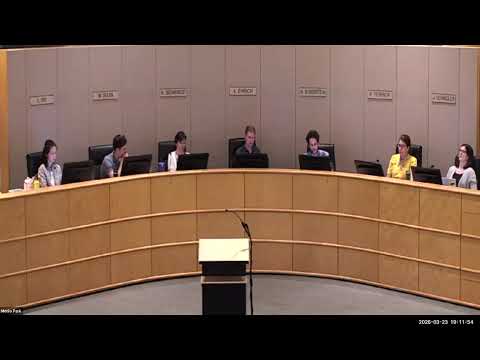
The Menlo Park Planning Commission on March 23 voted unanimously to recommend the City Council accept the 2025 General Plan Annual Progress Report (APR), which staff will present to the Council on March 24.
Planner Mister Smith summarized 2025 highlights for the housing element, saying the city issued building permits for 102 new dwelling units in 2025 (compared with 176 in 2024 and 65 in 2023). Smith also noted a $3.6 million loan to Habitat for Humanity of Greater San Francisco for acquisition of 335 Pierce Road to develop eight low‑income ownership units, continued work on an anti‑displacement strategy, and city action authorizing an RFQ and RFP for potential housing development on three downtown parking lots (seven development teams initially responded).
Smith said the city has nearly 3,000 total units in its RHNA allocation for the cycle and significant potential production in the pipeline, including large redevelopments: Presidio Bay's application for redevelopment at 345 Millfield Road (proposal described in staff remarks as approximately 670 units including 101 BMR units), MidPen construction of Oak Gardens at the VA campus, and Ravenswood City School District's approved 88‑unit affordable project at 320 Sheridan Drive.
Commissioners asked detailed questions about when units count toward RHNA (building permits issuance), the meaning of the projection period that rolls units forward, and how the mid‑cycle check‑in in 2027 will be used to evaluate progress. Several commissioners voiced concern that the current run‑rate (about 114 net increment units per year in recent years) leaves a tight margin and that the city is at risk of missing the affordable‑housing targets unless large pipeline projects successfully reach building‑permit stages. Commissioner Schindler suggested collecting ADU affordability survey data to better understand how ADUs are used.
Vice Chair Silverstein moved that the commission recommend council acceptance of the APR, and the motion passed unanimously.
Next steps: staff will forward the APR to the state as required by April 1 and present the report to the City Council for review on March 24; commissioners signaled close attention to the 2027 mid‑cycle RHNA check‑in.