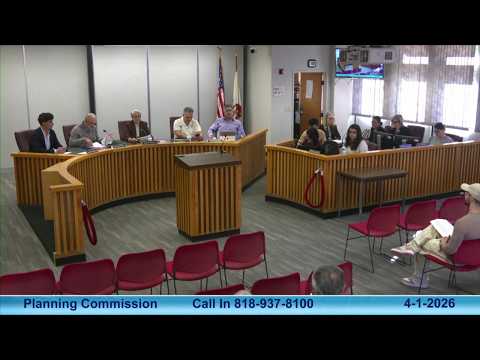
Glendale planning commission studies objective design standards to speed housing approvals; commissioners and residents raise buildability and cost concerns
Loading...
Summary
At an April 1 study session the Glendale Planning Commission reviewed extensive zoning code amendments and a new Objective Design Standards chapter intended to create measurable rules for multifamily and mixed‑use development. Staff said the changes align local rules with state housing laws; commissioners and public commenters pressed staff on buildability, costs and neighborhood protections.
Staff from Glendale’s Long Range Planning division presented a study session April 1 on proposed citywide zoning code amendments and a new Objective Design Standards (ODS) chapter that would convert subjective design guidelines into measurable rules for multifamily and residential mixed‑use projects. The briefing was informational; no action was taken. The public hearing is scheduled for April 15, and staff said the City Council is tentatively scheduled to introduce the ordinance May 12 with adoption May 19; the draft ordinance would take effect June 20 if approved.
The draft ordinance updates residential and commercial development chapters (GMC 30.11 and 30.12) and creates a new ODS chapter (GMC 30.17). Staff said the changes do not increase base density or floor‑area ratios but do propose higher lot coverage in more intense residential districts (from 50% to 60%), elimination of the per‑floor “wedding cake” setbacks, and a uniform three‑story by‑right height limit. Open‑space requirements would shift from a per‑unit square‑foot minimum to a percentage‑of‑lot measure for a new ground‑floor common open‑space amenity (COSA). Smaller projects of seven units or fewer could provide enlarged private open space instead of COSA. For commercial corridors the draft removes the conditional‑use requirement for multifamily projects and introduces a consistent, pedestrian‑oriented 12‑foot build‑to line from curb to facade.
Staff framed the ODS as a twofold policy: provide clear, objective standards so qualifying projects may be approved ministerially and protect neighborhood compatibility through measurable massing, modulation and facade articulation rules. Staff cited state laws as drivers, naming SB 35, SB 167 and SB 330 and noting SB 79 — which takes effect July 1 — as a reason to adopt local objective standards before statewide provisions limit local review.
Commissioners focused their questions on practical implementation and potential unintended consequences. Commissioner Malekian pressed staff on whether 100%‑affordable projects would be exempt from certain requirements and whether alternatives (for example, a rear setback instead of an upper‑floor stepback) had been tested. He said the draft’s combination of setbacks, COSA dimensions, balcony encroachment limits and minimum unit sizes could leave very narrow buildable floor plates on typical 50‑ to 75‑foot lots and predicted frequent waiver requests. "I'm just wondering, what am I left with? Absolutely nothing," he said, summarizing his concern that the standards as drafted might force developers to seek concessions rather than enabling predictable, by‑right approvals.
Staff replied that consultants had tested massing models during the code‑update process and that some options had been discussed but not included after council direction; legal counsel would confirm the question about exemptions for 100%‑affordable projects. Staff also agreed to provide additional conceptual plans and clarifications for the public hearing and to refine ordinance language where details (for example, elevator‑shaft setbacks and allowances for subterranean garages) may conflict with building‑code or accessibility needs.
Cost and constructability questions surfaced repeatedly. Commissioners and commenters warned that requirements such as recessed windows and bans on certain low‑cost materials could raise construction costs and undermine affordability. Staff said a prohibited‑materials list (rather than a closed permitted list) was retained so the code would not prevent future materials from being used, but acknowledged that some architectural treatments could be costlier.
Public commenters were split. Residential and developer‑aligned speakers urged simplicity to avoid delays and added cost. Caller Shane Lee, representing a local housing group, told the commission, "We need to make it easy and quick to build housing," and asked the city not to overburden projects with setbacks that make foundations or tall buildings infeasible. By contrast, several residents urged tighter local control to protect neighborhood character and guard against displacement. Beth Brooks, a downtown resident, said the draft "allows bulkier buildings" and reduces open space; David Matsakanyan warned that removing discretionary review would reduce community voice and could strain infrastructure and public services.
Staff said the ordinance as drafted is intended to be CEQA‑exempt because it contains only minor text changes that do not increase density or height; individual projects will be evaluated under CEQA as required. Next steps: Planning Commission will hold a public hearing April 15 and forward recommendations to City Council, which staff expects to consider the ordinance in May. If adopted as scheduled, staff said the ordinance would take effect June 20, ahead of the July 1 SB 79 effective date.
The study session concluded with staff asking commissioners and the public to submit detailed feedback for the April 15 hearing; staff also noted links to prior Design Review Board and council presentations in the staff report for additional context.