County approves multiple tax‑abatement adjustments, debates AI‑assisted checklist for hearings
Loading...
Summary
Penobscot County commissioners granted a Kaufman abatement (assessment set to $130,000), denied Simmons and Keene requests, and approved a $12,500 land‑value reduction in Duroch. Commissioners also debated a draft abatement checklist and whether AI should be used to analyze hearing materials.
Penobscot County commissioners reviewed several tax‑abatement appeals at their April 1 workshop and discussed a new administrative checklist that staff piloted with an AI tool to generate recommendations.
On Kaufman v. State of Maine (an island property), Committee member (S6) moved to grant the appellant’s request and set the land assessment at $130,000; the chair (S1) seconded, and the chair called the vote. ‘‘All those in favor, please say aye,’’ the chair said; the motion carried unanimously.
On Simmons v. State of Maine (remote participant), commissioners concluded the applicant had not supplied sufficient supporting comparable evidence on land valuation and voted to deny the request. On Keene v. State of Maine (an inland property), commissioners again found the applicant had not met the burden of proof and denied the abatement.
In Duroch v. State of Maine (property affected by a railroad easement and questions about water‑influence adjustments), commissioners debated how the state had applied condition factors and water‑influence adjustments; Committee member (S6) moved to reduce the land value by $12,500, a motion seconded and carried unanimously.
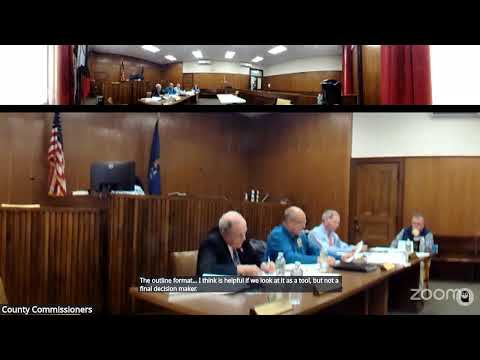
Administrative debate: S7 introduced a draft checklist and described having uploaded abatement case materials into an AI tool to generate recommendations. Committee member (S6) objected: ‘‘I don't think it's appropriate for this type of procedure...substituting AI for our role.’’ S7 and other commissioners replied that the checklist and AI output are optional aids for organizing facts and not a substitute for commissioner deliberation.
What happens next: the commission adopted the abatements and amended assessments as described above and directed staff to continue refining procedures; commissioners suggested sharing the checklist with applicants so future hearings are better focused on the documentary evidence needed to support requests.