Study: Marathon County faces hundreds more older-adult housing units by 2040; affordability and staffing flagged as top risks
Loading...
Summary
A regional planning consultant told the Marathon County Extension, Education and Economic Development Committee that demographic shifts could require hundreds of senior-oriented units by 2040 and that affordability and shortages of health-care workers will be the principal constraints.
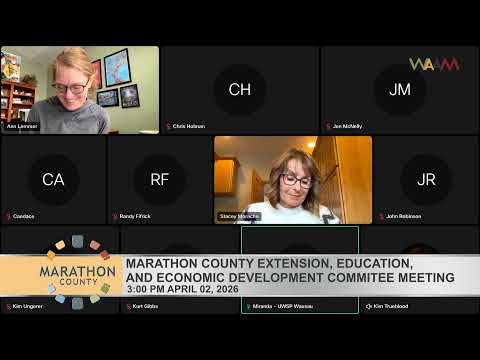
Sam Wessel of the North Central Wisconsin Regional Planning Commission told the Marathon County Extension, Education and Economic Development Committee that the Wausau older-adult housing study projects significant increases in demand as the population ages.
Wessel said the analysis, which builds on a 2022 Metropolitan Housing Assessment and newer DOA population projections, focuses on the share of housing that will be occupied by residents aged 55 and older. He identified two main constraints: "affordability and health care staffing are gonna be the biggest concerns," and he said those pressures will shape what housing types are feasible.
The presentation included specific projections: Wessel said an estimated additional 636 single-family owner-occupied homes will be occupied by people 55 and older by 2030; about 771 independent-living units are projected by 2040; and roughly 545 assisted-living, memory-care or skilled-nursing beds may be needed by 2040. Wessel cautioned demand shifts over time and described these as scenario-based estimates rather than precise targets.
Wessel recommended a mix of near-term and longer-term strategies: recruiting and training health-care workers in partnership with health systems and schools, investing in transit and amenities older adults use, preserving and retrofitting existing housing stock, and identifying vacant sites near services for targeted reuse.
During committee discussion, Supervisor Anne Lemmer raised transportation and volunteer-driver issues, noting changes in insurance and licensing that have reduced volunteer availability for rides to appointments. Wessel said transit solutions are expensive and often cross municipal boundaries, and pointed supervisors to an existing county transit plan as a starting point for coordinated action.
The presentation and questions underscored both the scale of projected need and practical constraints at the local level. The committee did not take formal action on the study during the meeting; members suggested returning the topic for further discussion on county roles and possible program responses.