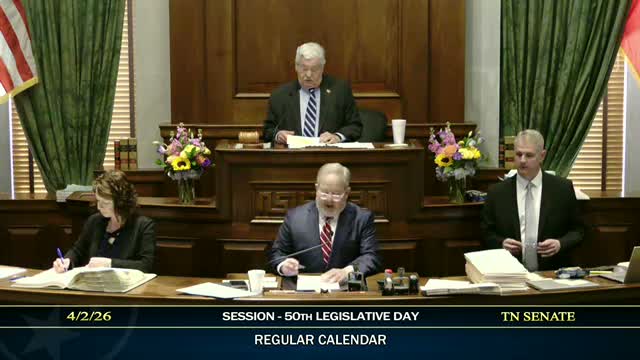
Senate adopts resolution to move most judicial and local elections to November
Loading...
Summary
Senate joint resolution 5 51, proposing to amend the Tennessee Constitution to move many judicial and county elections to the November general election cycle, passed unanimously after sponsor argued it would reduce costs and boost turnout.
The Tennessee Senate adopted Senate Joint Resolution 5 51 on third and final consideration with a unanimous recorded vote of 43–0. The resolution would amend Article 7, Section 5 of the Tennessee Constitution to move elections for many judicial and county offices to the first Tuesday after the first Monday in November (beginning with the 2034 elections) while preserving a separate schedule for assessors of property.
Sponsor Senator Hale said the change is intended to save state and local governments money and increase turnout in local elections. “One is to reduce the cost in our elections. Second is in our local elections...we feel like that if we move this to the August, November cycle rather than May and August, they will have more participation,” Hale said on the floor.
Senator Yarbrough cautioned against shifting local contests into national election cycles, arguing that staggered dates protect local accountability and keep local contests from being swamped by national issues. “There’s a reason that rule was put into place…that ensures that you have different roots of democratic accountability,” he said.
Sponsor and supporters clarified that the change would not move the assessor-of-property elections into November; those would remain on the earlier schedule to allow time for that office’s work.
The Senate read the resolution for the third time, debated briefly, and adopted it by voice and roll call; the Clerk recorded Ayes 43, Nays none. The resolution, if enacted through the constitutional amendment process described in the text, would be published by the Secretary of State and presented for further action per the constitution.