Senate approves bill to tighten pre-enforcement lawsuits, restoring earlier standing and ripeness rules
Loading...
Summary
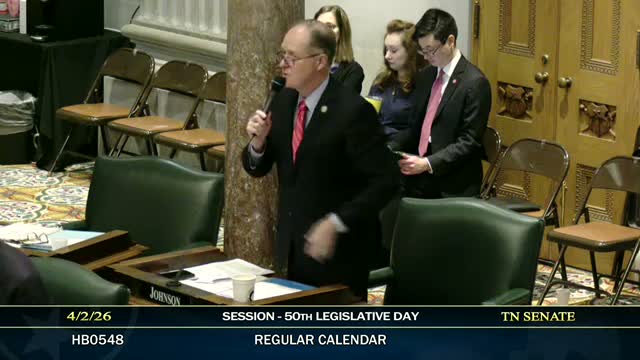
After hours of debate, the Tennessee Senate on third reading passed House Bill 19 71 to reinstate stricter standing and ripeness tests (frequently referenced as section 1 3 1 21), a move supporters say will reduce litigation and opponents say will limit citizens’ ability to seek pre-enforcement relief.
The Tennessee Senate voted 18–13 to pass House Bill 19 71 on third and final consideration, restoring pre-2018 limits on who may bring pre-enforcement challenges in state courts and tightening ripeness and standing requirements.
Sponsor Senator Stevens said the measure returns Tennessee law to earlier standards that required a concrete case or controversy before courts intervene. “We need to go back to the 2008 system,” he said, arguing that earlier rules prevented what he called “endless discovery” and legal uncertainty by keeping courts focused on actual, not hypothetical, disputes. “People want certainty. They want to comply with the law. And to comply with it, you need to have certainty,” Stevens said during floor debate.
Opponents warned the change would make it harder for individuals and advocacy groups to obtain declaratory or injunctive relief before alleged harms occur. Senator Yarbrough urged caution, saying the statute had given citizens a practical tool to resolve constitutional questions early and that removing it risks insulating government action from timely judicial review. “If they survive that, these cases drag on and on,” Yarbrough said of lawsuits he described as necessary to hold government to account.
Other senators raised examples and hypotheticals. Senator Taylor pointed to a recent local-government suit involving deployment of the National Guard and asked whether the statute had enabled that litigation; the sponsor replied that it had. Senator Campbell and Senator Ackberry pressed the sponsor on how the change would affect access to court for claims seeking injunctions to stop alleged unlawful government action.
Stevens and supporters framed the bill as restoring balance between the branches and preventing disruptive, pre-enforcement suits that could produce conflicting court orders across jurisdictions. “This law allows that…they could file those pleadings,” Stevens said of pre-enforcement litigation, calling the current regime a source of uncertainty for citizens and state agencies.
The bill’s passage restores requirements that, in the sponsor’s view, require plaintiffs to show actual or imminent harm before seeking injunctive relief; supporters said declaratory remedies will remain available under the traditional declaratory-judgment statute. Opponents said that option is narrower and can impose additional procedural hurdles that leave citizens without a timely remedy.
The Senate’s action sends the bill forward in the final-action process; supporters said it will lower litigation costs and administrative burdens, while critics signaled plans to press concerns in subsequent stages or through public comment.
The Senate debate was lengthy and marked by repeated questions about the practical effect of the change, standing doctrine, and the difference between statutory declaratory relief and pre-enforcement injunctive actions. The chamber adopted the bill after roll-call voting.