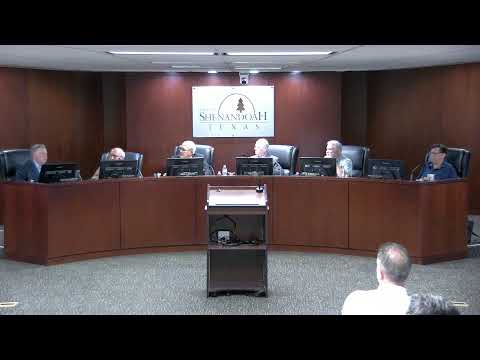
Council hears first round of proposed changes to Shenandoahs Integrated Development Code
Loading...
Summary
Planning staff presented a multi-meeting plan to amend the IDC, proposing to eliminate underused zones (R-22, R-35, O-1, SPH), redesignate a C-3 corridor as a redevelopment district and tighten outdoor display and use standards; staff said the rewrite will be presented in sections over several months.
Planning staff (identified in the meeting by the first name Bill) presented the first of several monthly updates on recommended amendments to the Integrated Development Code (IDC), focusing on sections 1through 4. Bill said the IDC spans 491 pages and that the planning and zoning commission spent many hours reviewing uses, setbacks and zone definitions to align the code with the city's current land supply and development expectations.
Key recommendations described by Bill included eliminating rarely used single-family residential zones (R‑22 and R‑35) and a restricted-office category (O‑1), removing the Sports Hospitality (SPH) district that has not developed as predicted, and reclassifying the community-commercial (C‑3) area along the Wellman-to-Research Forest/I‑45 corridor as a "redevelopment" district with stricter limits on outdoor storage and temporary displays.
Bill walked council through how the IDC's uses table works (an "S" indicates a use requires a special-use permit; an "X" indicates the use is permitted) and described a rewritten home-business section that resulted from months of public comment. For the C‑3/redevelopment area, planning staff recommended that many uses be routed to special-use review so projects backing up to neighborhoods receive extra scrutiny.
Why it matters: Changes to zoning categories and use allowances affect what kinds of commercial, retail and mixed-use developments can be built on key parcels and have implications for sales-tax revenue and the city's long-term land-use strategy. Bill noted a handful of critical parcels (for example, the corner of I‑45 and Research Forest) remain subject to special consideration because of their sales-tax potential.
Next steps: Staff said it will present remaining IDC sections in subsequent monthly meetings and host multiple public hearings so residents have repeated opportunities to review and comment before council considers final adoption.