Get Full Government Meeting Transcripts, Videos, & Alerts Forever!
Get email alerts on the Affordable Housing Subsidy topic
No spam. Unsubscribe anytime.
Developers ask Cook County HRA to act as fiscal agent for donor-backed rent subsidies at The Heights
Summary
Developers of The Heights asked the Cook County HRA to serve as a fiscal agent for a private donation program routed through Boreal Waters (a 501(c)(3)) to provide targeted rent subsidies for households who fall between AMI bands and face sharp rent increases.
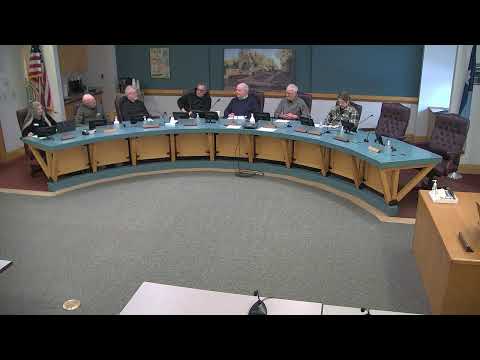
Developers of The Heights told the Cook County Housing and Redevelopment Authority on March 18 that gaps between area median income (AMI) bands are producing steep rent cliffs for many prospective tenants and asked the HRA to act as a fiscal agent for a private, donor-funded subsidy program.
"If I make $100 a year more than the limit for a 60% (AMI) and I want a one-bedroom, my rent is gonna go from $1,071 to $1,429 a month," said Dennis Ruzestahl, a limited partner in the real estate partnership developing The Heights, illustrating how small income differences can trigger large rent increases. Ruzestahl, along with fellow investors Patty Beyer and Gary Lats, presented sample rent and income tables for the first 16 approved applicants to show many would pay 36–47% of income for housing.
The developers proposed raising private donations — including tax-advantaged gifts routed through Boreal Waters, a 501(c)(3) — that a management company would use to subsidize specific tenants. Because Boreal Waters cannot disburse funds directly to tenants or projects in the form proposed, the developers asked the HRA to serve as a fiscal agent: the management company would verify incomes and subsidy amounts, the HRA would approve the allocations and the money would flow through Boreal Waters for tax treatment and reimbursement.
Developers provided preliminary arithmetic: for the first 16 tenants the monthly shortfall to reach a 30%-of-income target totaled about $3,200 (roughly $38,000 a year). With more units occupied they estimated the full program might require on the order of $90,000 per year, though they said a program targeting 35% of income could be more realistic and less costly.
HRA members welcomed the concept but flagged legal, audit and administrative questions. "We can accept donations; we cannot ask for donations," the chair said, stressing legal limits on solicitation. Commissioners asked for written legal guidance on whether the HRA may accept, hold or move donated funds in this way, how audit trails would be maintained, and whether annual recertification and income verification would create ongoing staff workload. Executive Director Jeff said the HRA would expect monthly summaries from a rental management company and would sign off before any reimbursement occurred.
County Commissioners Gamble and Sullivan, present at the meeting, recommended defining clear, consistently applied criteria and advised the HRA to study precedent from other HRAs and to ensure compliance where federal or state funding rules (for example, HUD-linked subsidies) apply.
No formal action was taken; the board asked staff and developers to schedule a follow-up meeting that includes the county attorney, auditor-treasurer and legal counsel to work through authorities, audit requirements and operational details. Developers said they would continue drafting program documents and identifying potential donors.
Next steps: HRA staff will coordinate a legal and auditor meeting with the developers and Boreal Waters to produce a detailed operational proposal and any necessary legal opinions before the HRA considers formal approval of a fiscal-agent arrangement.