Commission amends traffic-calming policy to speed resident-initiated speed cushions
Loading...
Summary
The East Grand Rapids City Commission approved amendments to its traffic-calming policy to allow administrative approval of low-cost speed cushions and a resident-initiated pathway (including an 80% petition option), following multi-year complaints from Elmwood residents about speeding and a recent child-injury incident.
The East Grand Rapids City Commission voted to amend the city traffic-calming policy to allow an administrative pathway for installing low-cost speed cushions and to create a resident-initiated route that can be used when an 80% petition of affected households supports installation.
Deputy City Manager Lefebvre presented the change as a way to "streamline" deployments for devices that "are anywhere between $3,000 and $5,000" per installation set and to give residents an alternate route when traditional engineering criteria are not met. He said the existing tube-speed study requirement remains the typical starting point but staff will permit an 80% resident petition to qualify for an administrative approval path.
Commissioners asked how the priority queue will work, whether the requirement to begin with a speed study would remain and how engineering judgment would apply. Lefebvre said staff would still start with the usual speed studies and engineering checks but added the policy defines a second path for strong resident support; installations would be prioritized and scheduled "as funds allow".
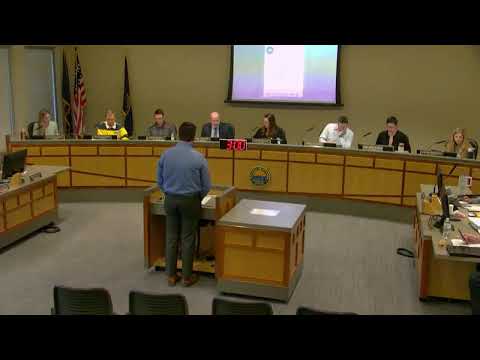
Multiple Elmwood residents who testified during public comment told the commission they had spent years trying to move the process, citing near-misses and a crash involving a child. Robin, who said she "initiated the process on Elmwood," told the commission the petition and study process had been slow and opaque. Nicole Vaketa said the street was a popular cut-through and called the multi-year delays "incredibly disheartening." George Lessons and other neighbors described repeated speed incidents, including one report of a car traveling 95 mph on a residential block.
Commissioners emphasized the policy change does not alter technical placement standards (distance from driveways, curves, controlled approaches) and noted that speed cushions are not appropriate on all streets. Several commissioners said they supported streamlining the process while retaining staff oversight and engineering judgment. The motion to adopt the amendment carried.
The commission also discussed additional non-permanent interventions—such as targeted enforcement and mobile radar trailers—that staff already deploy as initial responses and said they will continue to provide weekly updates to commissioners on traffic actions in their wards.
The change is intended to shorten timelines for eligible, low-cost installations; staff estimated the administrative pathway could reduce a process that previously could take more than a year to roughly a month for qualifying requests.