Get Full Government Meeting Transcripts, Videos, & Alerts Forever!
Get email alerts on the Parks Maintenance topic
No spam. Unsubscribe anytime.
Council holds hearing on closed Tule Springs Regional Park, sets 30‑day status check
Summary
City staff told council the developer closed Tule Springs Regional Park and did not respond to demands to reopen; the developer said it has sued the Village 3 HOA and proposed repairs and a 30‑day check‑in; council set a status check and asked for regular updates to ensure the park is restored to city standards.
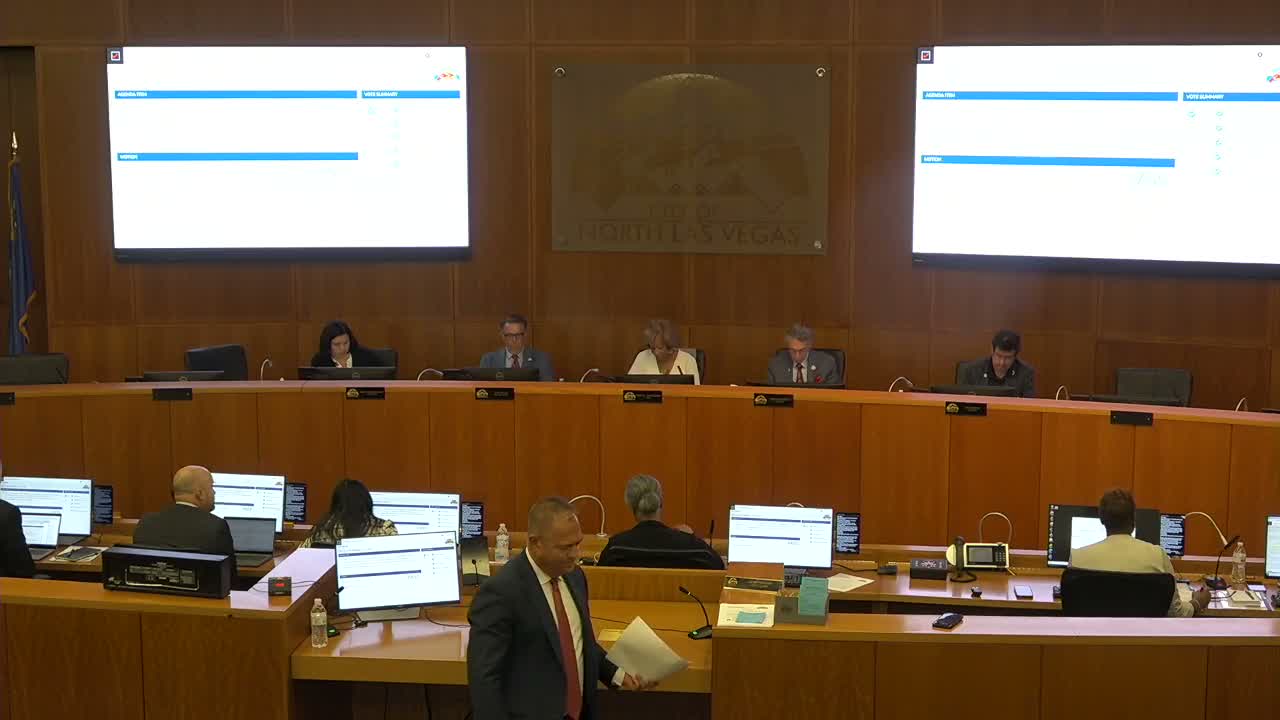
Mayor Goins Brown opened a public hearing on the closure of Tule Springs Regional Park after staff said the master developer had closed the facility and failed to meet obligations in the parties’ development and parks agreements.
Chief Deputy City Attorney Marissa Rodriguez told the council the hearing was held under section 11.03 of the development agreement between the city and the master developer and that staff would present evidence showing the developer was not in compliance. Rodriguez said city staff was seeking two outcomes: a finding of noncompliance and authorization for the city manager and city attorney’s office to pursue enforcement, including judicial relief if necessary.
Alfredo, the city’s director of land development, summarized the city’s outreach and code enforcement steps. He said the city first received complaints about debris in the park in September 2024, issued citations and demand letters, and discovered barricades at park entrances in late 2024. City crews subsequently removed an encampment and performed a cleanup that the city estimated cost about $3,700. Alfredo said repeated requests for engagement by phone and email received little or no response from the developer.
Doug, the parks and recreation director, presented photos and a short video documenting conditions during a Dec. 30, 2025 site assessment. He reported the turf across much of the park is no longer viable and will require replacement; sand from volleyball courts has migrated across sidewalks and the parking lot; one basketball backboard is vandalized; several trees need replacement; the restrooms are closed and show sanitation stains; and the splash pad needs pressure washing. He said playground structures and some courts appear in good condition but emphasized that visible City of North Las Vegas branding at the entrance and throughout the site has created resident confusion about maintenance responsibility.
Assistant City Manager Sally Moore outlined the city’s formal timeline: a demand letter sent June 11, 2024; an attempted meeting in July; a facilitated meeting on Oct. 9 that staff believed had produced progress; a second demand letter on Nov. 18; a developer request for a 60‑day extension (Nov. 26) that staff denied Dec. 3; and a final demand letter sent Dec. 17. Moore said staff offered to pause pursuit of judicial relief if the developer provided evidence it had retained a contractor and would complete repairs in a reasonable time, but the developer did not meet those conditions and the park remained closed.
On behalf of the master developer, attorney Bob Groenauer acknowledged city staff’s efforts and said the closure resulted from a dispute in which the Village 3 HOA declined to pay invoices the developer submitted for park maintenance. Groenauer said his client filed a lawsuit that same day against the HOA and planned to amend it to add breach of fiduciary duty claims against HOA board members. He proposed to clean and repair parts of the park, estimated some areas could be opened within weeks while others (for example, turf replacement) could take about 30 days, and offered monthly reports or status checks to the city. Groenauer also agreed to work with parks staff on signage removal and to align repairs with the city’s punch‑list standards prior to any dedication.
Leonard Scott, the newly elected Village 3 HOA president, said the HOA is willing to honor contractual obligations but refuses to accept turnover of a park that is not fully repaired. Scott disputed the developer’s timeline and claimed the HOA had already provided $430,000; he said the developer had offered $10,000 while a local contractor’s bid to clean and open the turf area was $179,000.
Councilmembers pressed both sides on feasibility and timing. The parks director said a partial reopening within two weeks would be difficult and might require fencing off unsafe areas; full restoration would take longer. Councilmembers debated whether the dispute is fundamentally private (developer vs. HOA) or whether the city must act because city branding on site misleads residents and because public use is affected. City counsel framed the hearing as a required procedural step before any city litigation for breach of the development agreement.
Council directed the developer to work with city parks and management staff and asked for regular status updates. The council approved a motion to set a status‑check agenda item in approximately 30 days to review progress; the motion passed by voice vote. The council did not, in the meeting record, immediately authorize a city lawsuit but retained that option if sufficient progress is not demonstrated at the check‑in.
Next step: the developer agreed to provide updates and a 30‑day status report; the council and staff will assess whether additional city action, including litigation, is necessary if repairs are not completed or acceptable to city standards.