Get Full Government Meeting Transcripts, Videos, & Alerts Forever!
Get email alerts on the Accessible Housing topic
No spam. Unsubscribe anytime.
Nebraska senators debate new accessibility requirements for state‑funded housing
Summary
Senators debated a package of housing measures that would require cities to report accessible multifamily units and require the Nebraska Affordable Housing Trust Fund to reserve 10% of units for mobility‑accessible housing and 4% for audio/visual accessibility. Supporters cited Olmstead compliance and unmet need; opponents warned mandates could raise costs and reduce supply.
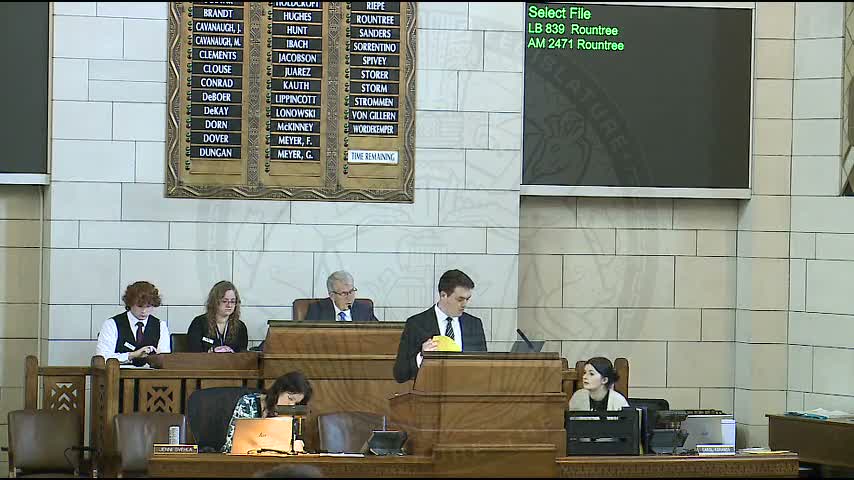
Senator Megan Rountree introduced a three‑part amendment package (AM 24‑71) that would require cities to report how many multifamily units meet Fair Housing Act accessibility standards, allow reporting of accessory dwelling units, and reserve a share of Affordable Housing Trust Fund projects for accessible units. "We have an obligation to meet the mandate of the Olmstead Supreme Court decision and to provide integrated housing options for those with disabilities," Rountree said in her floor opening.
The amendment includes language from LB 8‑40 that would require projects funded by the Nebraska Affordable Housing Trust Fund to set aside 10% of units for people with mobility impairments and 4% for people with hearing or vision impairments. Rountree said the percentages were negotiated with the Olmstead committee, the League of Municipalities and the Housing Developers Association after an initial proposal of 20%/10% proved too high.
Senator Dover offered a floor amendment (FA 11‑33) to strike the 10% and 4% requirements, arguing mandates would raise construction costs and reduce housing production. "If these accessible units sit unused, they will — are they able to be rented out to individuals without accessibility needs?" Dover asked, urging incentives rather than mandates.
Supporters including Senators McKinney, Abel, Conrad and Duncan pushed back. Senator McKinney said projects that rely on state funding should meet basic requirements: "If they need the state, we should be telling them there should be some requirements," he said. Senator Abel cited existing finance mechanisms (low‑income housing tax credits, NIFA, TIF) that already award points for accessibility and argued the amended numbers are workable for developers seeking funding.
Senators questioned the empirical basis for the 10%/4% figures. Senator Anderson asked how many ADA‑compliant units Nebraska needs; Rountree replied that LB 8‑39 is intended to establish baseline data by requiring reporting from the state's largest cities (a five‑year lookback) so the Legislature can quantify the deficit between supply and need.
The transcript shows extended colloquy but no recorded final floor vote on FA 11‑33 in the provided excerpt. Debate highlighted two recurring themes: advocates stressing legal obligations, waiting lists and human need for integrated housing; opponents stressing cost, market effects and preference for incentives administered via NIFA or DHHS programs. The discussion concluded with senators agreeing further data collection and program design will be necessary before a final policy decision.
The accessible‑housing package remains under active floor consideration; LB 8‑39 (reporting), LB 8‑40 (set‑asides) and LB 10‑41 (ADU reporting provisions) were debated as a combined amendment package on the floor with divisions requested and wide engagement from members.