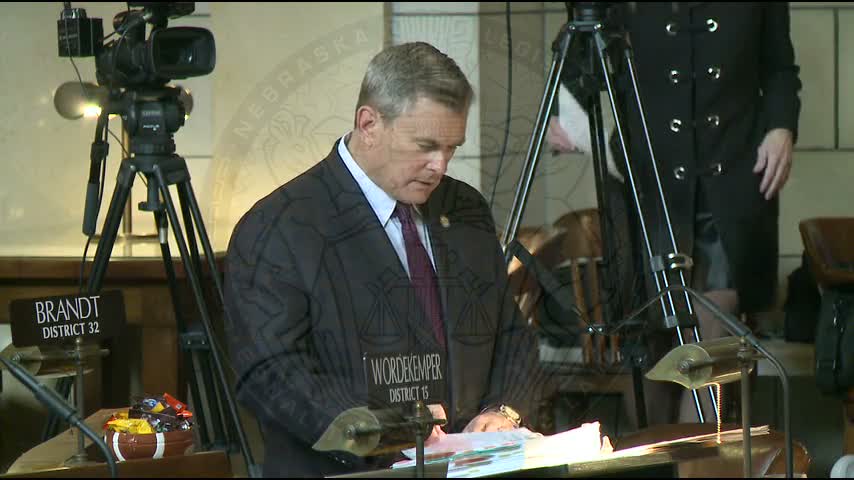
Senate passes revenue omnibus LB901 after hours of debate over tax credits and exemptions
Loading...
Summary
The Nebraska Legislature passed LB901 (the revenue omnibus) with the emergency clause after extended floor debate. Sponsors say the package raises roughly $26–30 million in FY2627 and preserves property‑tax relief; opponents warned about refundable credits and the end of a data‑center exemption.
The Nebraska Legislature passed LB901, the revenue omnibus package, with the emergency clause following extended floor debate and multiple procedural exchanges. The bill, advanced on final reading, passed after the clerk recorded the vote and announced the tally in favor.
Senator Von Gillen, the sponsor, told the chamber LB901 bundles four previously considered bills and ‘‘includes provisions to remove certain sales and use tax exemptions, sunset some tax credits, expand Department of Revenue authority, and allow the department to collect fees from delinquent taxpayers.’’ He said the bill is ‘‘critical to balancing our budget’’ and noted committee fiscal estimates showing a positive general‑fund impact of about $26 million for fiscal year 2627 and department projections closer to $30 million in later years.
Why it matters: lawmakers and budget staff have factored LB901 into the budget math for the current session; supporters said the additional revenue is necessary to preserve property‑tax relief already earmarked in the budget. Opponents warned that several provisions—most prominently refundable tax credits in the domestic‑violence/human‑trafficking sector and the termination of an IT/data‑center exemption—require more scrutiny.
Senator Anderson raised concerns about refundable credits, noting the bill allows credits that ‘‘can be converted and sold on the open market,’’ creating what he called ‘‘traceability’’ problems for taxpayer money. He said sizeable sums earmarked for nonprofits (the transcript cites multiple amounts that cumulatively exceed $1 million in program allocations) would be converted into credits that organizations could monetize, and that the record lacks a clear, auditable path showing how tax revenue would translate into sustained service outcomes.
Other floor speakers detailed negotiated changes to fees and exemptions. Supporters emphasized compromise language on mechanical‑amusement and cash‑device fees and a statutory structure intended to protect existing property‑tax relief funding. Senator Kautz, a revenue committee member, said the committee ‘‘listened’’ to both small‑business operators and neighborhood concerns and highlighted changes to registration/decal treatment for cash devices that reduce duplication of fees for machine replacement.
The chamber recorded the final vote after a roll call; LB901 passed with the emergency clause and the clerk later noted the bill was presented to the governor (as recorded in the session transcript). The passage means several statutory changes and funding redirections in LB901 will take effect immediately upon signature under the emergency clause.
What comes next: with passage on final reading and the emergency clause attached, the bill moves to the governor for signature. Any fiscal or administrative implementation steps (for example, the Department of Revenue’s expanded collection authorities or the mechanics of refundable credits) will be executed by the agencies named in the bill and subject to the statutory effective dates in the enacted text.