Grandview Heights council debates right-of-way plantings, height limits and enforcement ahead of April vote
Loading...
Summary
At a work session, Grandview Heights council members and staff reviewed Ordinance 2026-07 to amend yard-care rules, discussing a 10-inch grass cap, possible allowances for flowers and pollinator plantings, a 3-foot proposal for right-of-way plantings, permit options and enforcement procedures; no vote was taken.
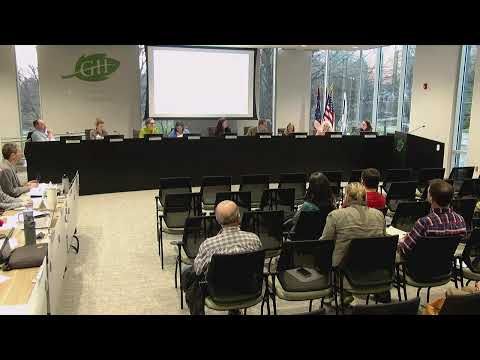
The Grandview Heights City Council held a work session to discuss Ordinance 2026-07, a proposed update to the city’s yard-care and property-maintenance code that would renumber §5,211 and add rules on managed natural landscapes, rights-of-way plantings, height limits and enforcement. The sponsor, Mayor Kearns, and city staff reviewed packet materials and public feedback; no votes were taken during the session.
Why it matters: The ordinance seeks to balance resident plantings and pollinator-friendly landscaping with safety, access and public-works needs in city-owned rights of way. Councilmembers and staff debated how to write enforceable standards that preserve emergency access, sight lines and address visibility while allowing some plantings that support biodiversity.
Staff reported the city documented 29 complaints last year relating to plantings in the right of way, with roughly 25–27 unique properties, and provided those records to council for review. "We we identified 29 complaints that were filed relating to, plantings," a staff member said during the meeting.
Council discussion focused on three practical areas: the ordinance’s framing language, allowable plant types and height limits, and enforcement procedures. Councilmember Kozak pushed back on subjective wording in the proposed 'whereas' clauses, asking, "Pleasing as determined by whom?" and recommending that definitions be clarified or moved to the code’s definitions section.
Height limits and permitted plantings were a central point of debate. The draft retains a 10-inch limit for grasses and weeds "because that is the current code," staff read aloud, but councilmembers said ornamental plantings (for example, tulips or daffodils) should be treated differently. Councilmember Kozak proposed that plantings in the right of way "should not exceed 3 feet in height" as a simple standard; others said a fixed number may need flexibility at some corners for sight lines and suggested tying limits to obstruction of access or visibility rather than a single universal height.
On enforcement, the draft would allow the director (building and zoning, or the director of public safety and the fire chief in some versions discussed) to issue a notice of noncompliance and require removal if violations are not corrected within five business days; the cost of city-ordered maintenance would be reported to council and returned to the county auditor for tax collection, consistent with Ohio Revised Code 731.51. Council expressed a preference to lead with education: "we'd much rather work with residents than at them," the presiding officer said, and staff confirmed an intent to emphasize outreach and workshops.
Multiple members asked staff to separate private-property rules from rights-of-way rules, and to return a substitute ordinance that incorporates tonight’s edits. Staff cited neighboring-city approaches as models: some municipalities allow limited right-of-way plantings by permit or maintain stricter city-only planting rules; regional limits on grass height range from about 8 to 12 inches depending on the city. Staff noted Columbus’s pollinator-garden model and a 12-inch restriction for 'rank growth' in that context.
Procedural note and next steps: Director Kazem will draft a substitute version that incorporates the council’s input. The ordinance is scheduled for a third reading and potential vote at the regular council meeting on Monday, April 13 at 7:00 PM. No formal votes on the ordinance occurred at the work session; the meeting concluded with a procedural motion to adjourn, moved by Councilmember Wise and seconded by Councilmember Smith.
What remains unresolved: Council has not finalized whether to adopt a universal numeric height limit for rights-of-way plantings, whether to require a permit for new plantings, or which city official(s) will have enforcement authority; staff will return with recommended language before the April 13 meeting.
Context: The discussion referenced prior council action in 2024 that carved native milkweed out of the city’s noxious-weeds list to protect pollinators, and cited state and local code sections (including standing references to codified ordinance §905.01 and Ohio Revised Code 731.51) in framing enforcement and priority-of-use language.
Ending: The council directed staff to prepare a cleaner substitute ordinance reflecting the edits discussed and to provide clarifying language on definitions, permitting options and enforceable standards. The council expects the substitute in time for the April 13 third reading and possible vote.