Get Full Government Meeting Transcripts, Videos, & Alerts Forever!
Get email alerts on the Rezone Training topic
No spam. Unsubscribe anytime.
Planning commission receives training on rezone process, differences from quasi‑judicial actions
Summary
Commissioners received a mini-training explaining that rezones are legislative (map changes requiring comprehensive-plan consistency) and differ from quasi‑judicial permit decisions; staff urged caution about spot zoning and emphasized the commission’s advisory role to council.
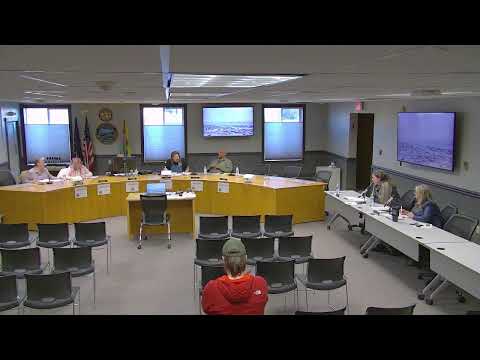
The Wasilla Planning Commission received a short training on March 24 explaining how rezones differ from quasi‑judicial permit decisions and what the commission’s advisory role entails.
The presenter explained that "a rezone is a legislative action as opposed to a quasi-judicial [one], and it involves changing the zoning map," and outlined the two primary considerations the code requires for rezone recommendations: compliance with the comprehensive plan and preservation of public health, safety and welfare.
The session clarified who may initiate a rezone (City Council or mayor via ordinance, or members of the public via application), how the commission reviews rezone applications (public hearing, findings of fact, recommendation to council), and how courts review legislative rezones (standard is whether a decision was arbitrary and unreasonable rather than routine appeal of the record). Staff noted that spot zoning—changing rules to benefit a single property owner—risks being illegal and that the commission should consider case law and procedural protections when advising council.
Commissioners said the training helped explain why the commission’s recommendation on Ordinance Serial No. 2607 should be considered in the context of the Phase 2 Title 16 work and the comprehensive plan: rezones and ordinance changes carry different procedures and legal standards, and appropriate notice and findings are central to avoiding appeals.
The presenter encouraged commissioners to use the online zoning maps and permitting tools to review parcel-level information and to consider infrastructure capacity—water, sewer, sidewalks and parking—when evaluating future rezones or ordinance changes.