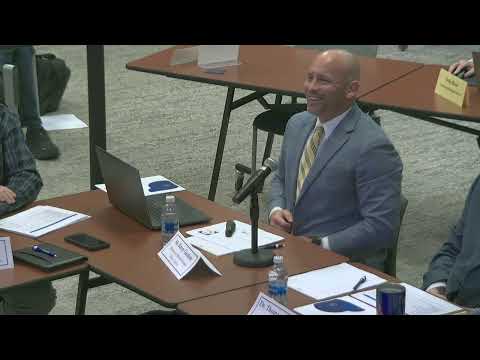
Carmel Clay Schools told SEA 1 could shrink referendum revenue by $94 million; board weighs levy options and voter messaging
Loading...
Summary
Administrators and Policy Analytics told the Carmel Clay Schools board that Indiana’s SEA 1 will reduce net assessed value and referendum revenue, projecting about $94 million in referendum shortfalls over the next eight years and prompting discussion of higher levy scenarios, parcel-level tools and community outreach.
Carmel Clay Schools trustees spent the work session on Wednesday hearing how changes in Indiana law could reduce property-tax revenue and complicate any operating or safety referendums the district might place before voters.
Barry Gardner, a consultant with Policy Analytics, told the board that Senate Enrolled Act 1 (SEA 1) changes several long-standing deductions and exemptions — converting the standard homestead deduction to a percentage-based deduction phased to about 67% by 2031, creating a 10% homestead tax credit (up to $300) beginning in 2026, adding deductions for a so-called “2% class” (apartments, long-term care and farmland) and raising the de minimis business personal property investment threshold — all of which reduce the district’s net assessed value and therefore lower property-tax revenue available to support referendums.
"As we increase deductions, we're going to push down net assessed value," Gardner said, adding that his firm projects the district could receive about $7 million less in referendum revenue in 2031 than it would have under the prior tax structure, and that cumulatively the district faces much larger shortfalls under baseline scenarios.
Why it matters: the board’s operating and safety referendums fund staff, safety programs and student services. Amanda Kushar, the district’s director of finance, told trustees that the operating and safety referendums together represent roughly 16% of the district’s overall budget (19% excluding debt service) and will raise more than $37 million in 2026; she said referendum dollars pay for about 300 teacher positions, SROs in every building and in‑school therapy and social‑work services.
Administrators and consultants gave trustees a range of levy-and-rate scenarios to consider. Gardner said the mechanics of SEA 1 mean that as deductions grow and net assessed value declines, tax rates must rise to produce the same levy revenue (rate × assessed value = revenue). Under the firm’s scenarios, referendum rates needed to maintain current program levels in low-AV years could approach the high 30s to low 40s (cents), depending on the levy chosen, growth in assessed value and whether neighboring taxing units change their levies.
Board discussion focused on tradeoffs and assumptions. Trustees asked for several follow-ups: a cumulative chart showing long-term net-assessed-value changes, parcel-level calculators so residents can see expected impacts on specific addresses, an explicit list of potential program reductions if a referendum fails and clearer public-facing language for any ballot question. Several trustees emphasized they do not want to resolve the matter by cutting staff if avoidable; others urged tying referendum proposals tightly to items in the district’s strategic plan.
Dr. Rowe, the district superintendent, framed the timing decision around several constraints: the safety referendum is next up in 2027; state rules now require referendums to be placed in November of even-numbered years; and a forthcoming state change (now scheduled for 2029) may require referendum revenue sharing with charter schools. He told the board administration’s working estimate is a projected shortfall of about $94,000,000 in referendum revenue over the next eight years if the district does not pursue a local solution.
Administrators stressed assumptions underlying the projections: the consultants’ baseline uses a historic gross-assessed-value growth assumption (roughly 4% annually) and assumes other taxing units take permitted growth; actual outcomes will depend on future legislative changes, local government decisions (for example, whether the city pursues local income tax), and economic conditions.
Next steps: trustees will receive an administrative presentation on May 13 with a recommended rate and draft ballot language, followed by formal paperwork in late June if the board chooses to place a question on the November ballot. The board did not take action Wednesday; the meeting ended with a motion to adjourn.
Representative quotes
"As we increase deductions, we're going to push down net assessed value," Barry Gardner said, summarizing the core mechanism driving the district's projected revenue loss.
"These referendums are more than just line items in our budget," Amanda Kushar said. "They are direct investments in the people and the protections that allow our students to thrive every single day."
What remains unresolved
Administrators committed to producing: parcel-level calculators for public use; cumulative AV charts; explicit scenarios showing program reductions tied to specific dollar shortfalls; and draft ballot language that will state both a maximum rate and a maximum levy for an eight-year period.
Ending note
The board scheduled further work-session review and an administrative presentation on May 13; any decision to place a referendum on the ballot would return to the board for a resolution before legal filing deadlines.