Get Full Government Meeting Transcripts, Videos, & Alerts Forever!
Get email alerts on the Utilities topic
No spam. Unsubscribe anytime.
Decatur staff previews fats, oils and grease ordinance to protect sewer system
Summary
City staff outlined a proposed fats, oils and grease (FOG) ordinance that would require third-party maintenance of grease interceptors, impose manifest-tracking and allow inspection and emergency suspension to protect the wastewater system; staff expects to deliver a legal-ready draft by month'end.
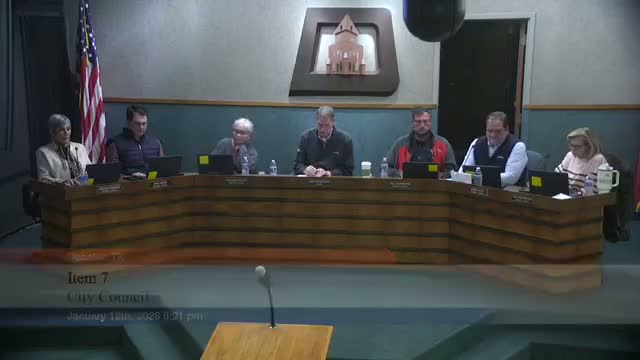
Decatur ' City staff on Jan. 12 previewed a draft ordinance aimed at protecting the wastewater collection and treatment system by standardizing requirements for grease traps, interceptors and oil-water separators and by tightening maintenance, inspection and enforcement rules.
Wayne, a city staff member, told the council the draft (referred to as the FOG ordinance) would apply to facilities that generate fats, oils and grease such as restaurants, food-processing operations, car washes and vehicle maintenance sites, as well as any operation the city designates as requiring pretreatment. "This ordinance will not apply to residential users," Wayne said, and the ordinance would define required devices, sizing and installation standards, cleaning schedules and manifest-tracking for cleanouts.
Wayne said the ordinance is intended to prevent backups and damage to public infrastructure and would include inspection authority, penalties for noncompliance and emergency suspension of service when a health hazard is found. On enforcement and maintenance, Wayne said certain cleanouts must be performed by third-party haulers regulated by the Texas Commission on Environmental Quality. "It does have to be a third party that cleans it out," Wayne told the council.
Councilmembers asked whether the required devices are new or upgrades to existing equipment; Wayne said the ordinance primarily formalizes maintenance and manifest requirements already reflected in adopted building codes and is modeled off other cities with local modifications. Staff said it will produce a draft to legal by the end of the month and return to council for consideration.
Significance Councilmembers and staff said the ordinance is a preventative measure to reduce costly sewer backups and to provide a clear enforcement path when facilities fail to maintain required interceptors. If adopted, the ordinance will shift some compliance oversight onto a manifest- and inspection-based system and require third-party haulers for certain cleanouts.
Next steps Staff will complete the working draft, send it to legal for review, and return it to council for a hearing and possible adoption.