Get Full Government Meeting Transcripts, Videos, & Alerts Forever!
Get email alerts on the Impact Fees topic
No spam. Unsubscribe anytime.
Decatur council begins review of newly adopted impact fees, flags roadway charges as outliers
Summary
Council and staff reviewed a recent update to Decatur's impact-fee schedule and directed staff to convene the Capital Improvement Advisory Committee to recommend adjustments, focusing on roadway fees that staff say are high relative to peer cities.
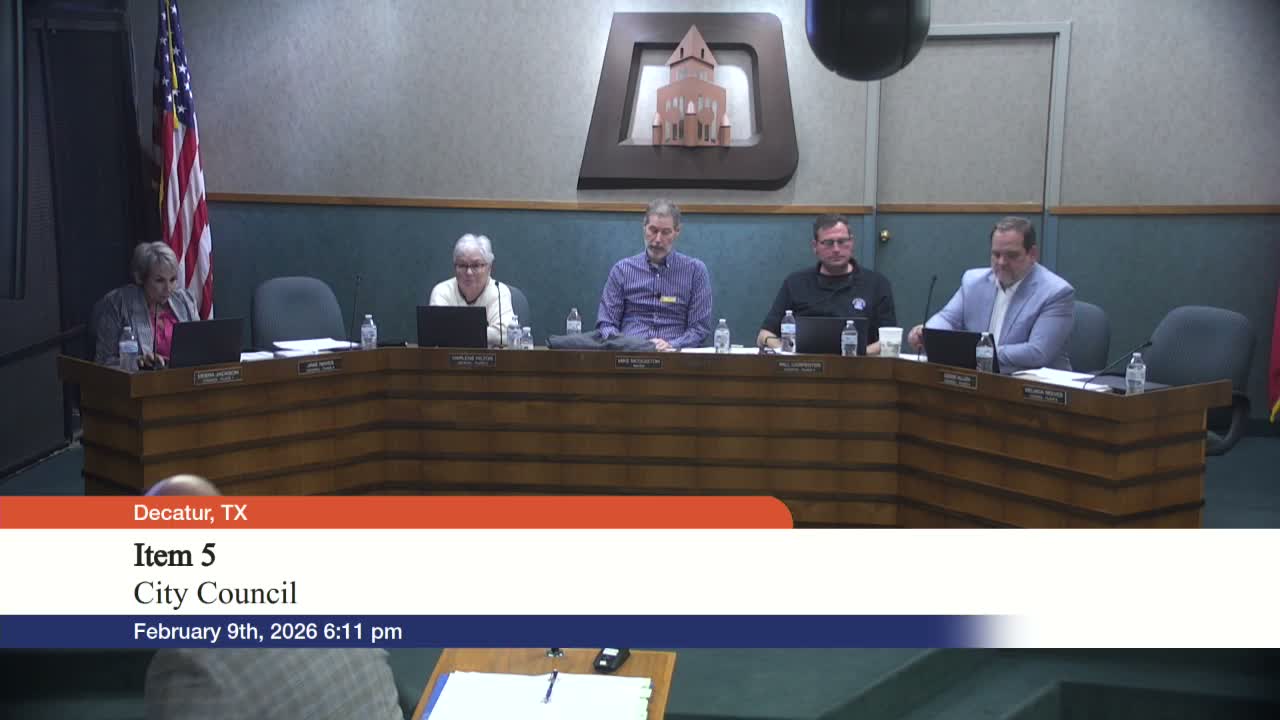
Council members and city staff spent the bulk of the meeting debating recently adopted impact fees and how they affect new development in Decatur. Wayne, the staff presenter for Development Services, walked the council through the fee schedule, showing how water, wastewater and newly adopted roadway fees are calculated by land-use category and development unit. He said roadway impact fees now account for the largest single increase in total fees for typical projects.
"We entered the market a little high on roadway," said Speaker 5 (staff), summarizing staff concerns and the effect on developers. Using an example for a 50,000‑square‑foot industrial building, Wayne presented calculations that raised total roadway-related charges into the hundreds of thousands of dollars when combined with water and wastewater fees.
Staff noted the mechanism by which roadway fees are set: a per‑development‑unit maximum drawn from Institute of Transportation Engineers land‑use trip rates, multiplied by a city collection percentage. Speaker 12 (finance/analyst) said the fees were calculated to achieve planned infrastructure capacity and warned that reducing fees without compensating changes could push some projects and roadway projects further down the capital improvements plan.
Council members pressed staff about comparators used in benchmarking. Speaker 6 pointed out that some peer cities’ contexts differ (for example, limited room to grow), so raw comparisons can mislead. Staff responded they used a 26‑city benchmark set and will normalize by year and service area where possible.
On balance, councilors said water and wastewater fees appear appropriately set and that the roadway fee warranted closer review. The council unanimously directed staff to bring this to the Capital Improvement Advisory Committee and to schedule a public workshop or CIAC meeting; staff said they would return recommended language or options by early March.
Next steps: staff will convene the CIAC, prepare normalized benchmarking data and present draft language to address credits in development agreements and potential percentage adjustments for roadway fees.