Get Full Government Meeting Transcripts, Videos, & Alerts Forever!
Get email alerts on the Open Records topic
No spam. Unsubscribe anytime.
County attorney briefs EDA members on FOIA duties and practical exemptions
Summary
Goochland County assistant county attorney Tiffany Heitacker led an in-depth FOIA refresher for Economic Development Authority members covering training cadence, public-record definitions, exemptions, response timelines, email risks and fees for large requests.
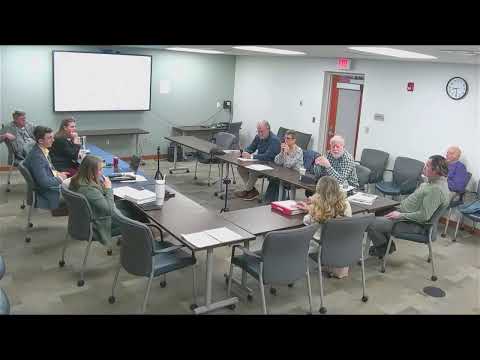
Tiffany Heitacker, assistant county attorney for Goochland County, led the EDA through a focused Freedom of Information Act refresher as the first agenda item of the March 18 meeting.
Heitacker told members that FOIA training is required every two years and that a county FOIA officer (Lisa Baskiewicz) maintains training records. She emphasized that public records are broadly defined — documents, email, audio and drafts — and that drafts can be subject to disclosure unless an exemption applies. “All records are presumed open unless an exemption applies,” Heitacker said, adding that officials must be careful when retaining drafts and using collaborative systems that preserve version history.
She warned that informal email chains or reply-all exchanges among three or more members can constitute a meeting under FOIA if they transact public business, advising members to avoid simultaneous reply-all discussions. On request handling, Heitacker reviewed five responses: provide records, withhold all (rare), redact and provide part, state you don’t have the records, or ask for more time (a seven-day automatic extension if notified). When withholding records, she said the county must specify the volume withheld and the specific exemption invoked.
Heitacker also walked through common exemptions (personnel information, attorney–client privilege, contract negotiations and appraisal data) and practical steps — keep a paper trail for responses, track time for large requests and negotiate narrower timeframes where possible. She noted the risk of large requests: “When our FOIA officer talks to staff, she counts estimated time and, if the cost exceeds $200, the requester may need to remit a deposit,” which pauses statutory deadlines.
Members asked about group tours, remote participation rules and what counts as a public meeting; Heitacker clarified that a gathering of three or more members discussing public business can be a meeting and that remote participation counts toward quorum in limited circumstances (disability, caregiving or personal matter with disclosure requirements). She urged members to consult the FOIA Advisory Council guidance and county FOIA officer when in doubt.
The EDA used the session to ask practical process questions and to confirm local points of contact for FOIA handling; Heitacker said staff in the county attorney’s office will follow up on technical questions.
The authority moved on after the training to citizen comment and regular business.